


I tweeted after the game on Saturday that “Patience is a virtue. Equally, so is having a defensive structure.” Whilst there are definitely merit to the arguments that you have to give a new manager time to instil the systems they want - especially in the context that Fulham waited until Deadline Day to do a deal for a centre-back, which our new coach clearly needed to try and play the way that he wants to; there are also incredibly concerning signs about what Arbeloa is trying to do in the way that his team sets up.

I’m sure there is going to be a lot made of the reported dressing room divide, comments from players, and social media fallout - and while those things are important, I want to try and get away from that here, to talk purely about what Arbeloa has been trying to implement so far on the pitch and why not adapting that is tantamount to defensive suicide within this league.
This is also not to say that he can’t change; the best coaches adapt to the scenarios in front of them and the players at their disposal - and yes, you can do that without completely trading in on your ideologies.
Football is a relative game, in that you have to respond to the other team on the field, and while you can impose a game plan, it is ultimately a series of trade-offs that you’re trying to make to fall on your side of the equation. Currently, however, there is no quick fix to what Arbeloa is trying to do.
I’m going also to use the term ‘rest defence’ here, which is a term adapted from German. Some people prefer to use ‘covering defenders’ or ‘men left back’ and that’s fine, use whatever language you want, but I like the term in terms of what it implies - not meaning players ‘having a rest’ but rather the ‘rest of the team’ left behind when your attacking players have gone forward to try to score; and I think it’s absolutely crucial to explaining why Fulham look so vulnerable every time that we lose the ball.
Over the last few days, I’ve been reading Jon Mackenzie’s excellent new book, The Spectre of Pep; which discusses this concept in the context of Pep Guardiola’s teams. I think despite his deep Real Madrid connection, it’s very obvious that Guardiola has had an influence on Arbeloa - his teams are constantly trying to create overloads in attacking positions, and are also attuned to the idea of ‘attacking small spaces and defending large ones’, but where Pep’s (and Marco Silva’s, which we’ll get to) systems worked was in the idea of not leaving his teams left exposed to counter attacks on regular occasions during games.
We see this in a number of ways - the inverted full-backs at Bayern Munich and early Manchester City saw them form a 2+3 shape behind the attacking line to give them defensive protection; whilst John Stones stepping into midfield in City’s treble winning season saw them utilise a 3+2 shape at times. While this is overly simplistic, there is one key element here: the idea that five players were in position to deal with turnovers should they occur even in the opposition third.
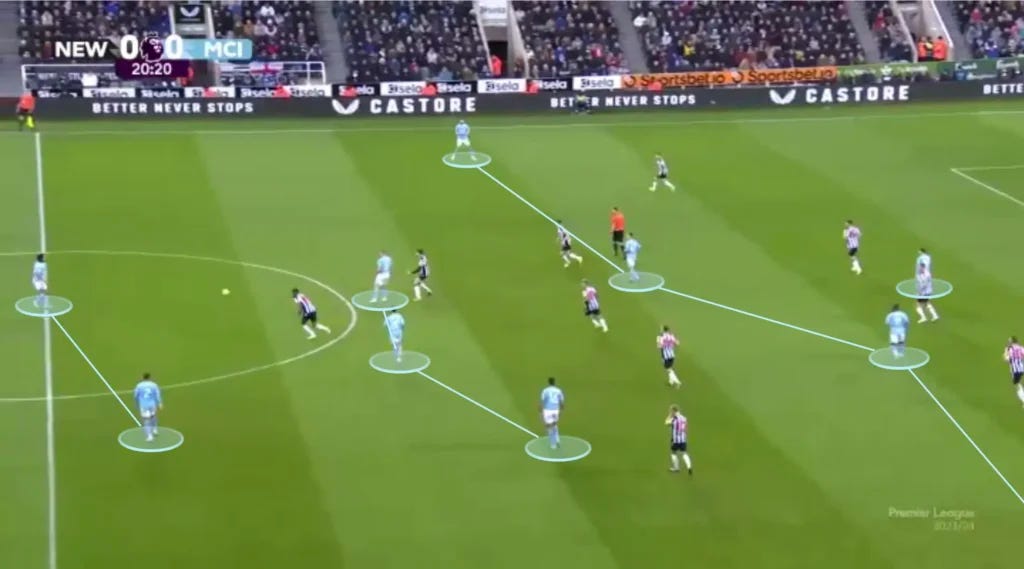
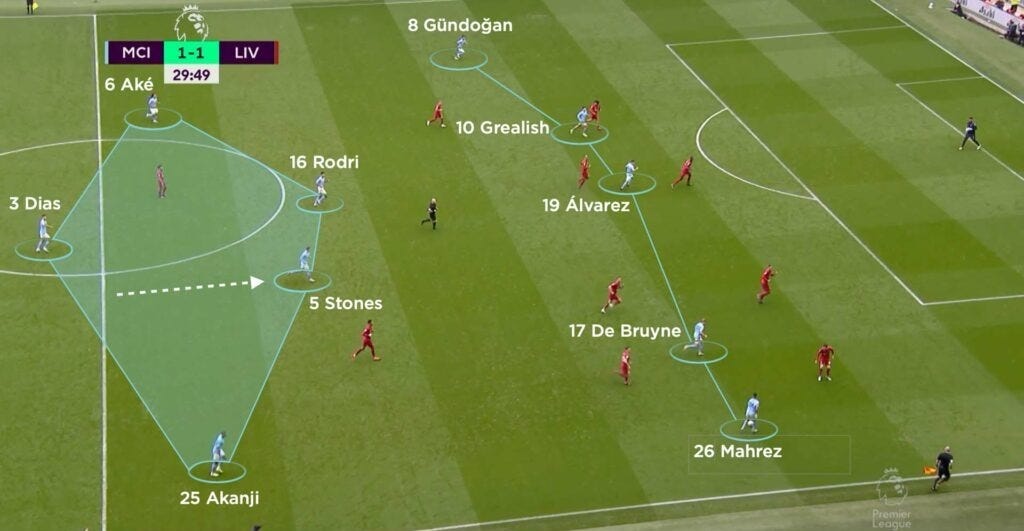
Now, Guardiola is one of the elite managers in the game, but I bring him up not because I am comparing Arbeloa to him, but to show the thinking behind how this kind of thing is set up. Let’s take it instead to Marco Silva, and the way that he set up. On paper, there is not much difference between what Silva’s tactical shape looks like and what Arbeloa’s does. Here are two starting lineups, both against Crystal Palace, in the past 12 months.
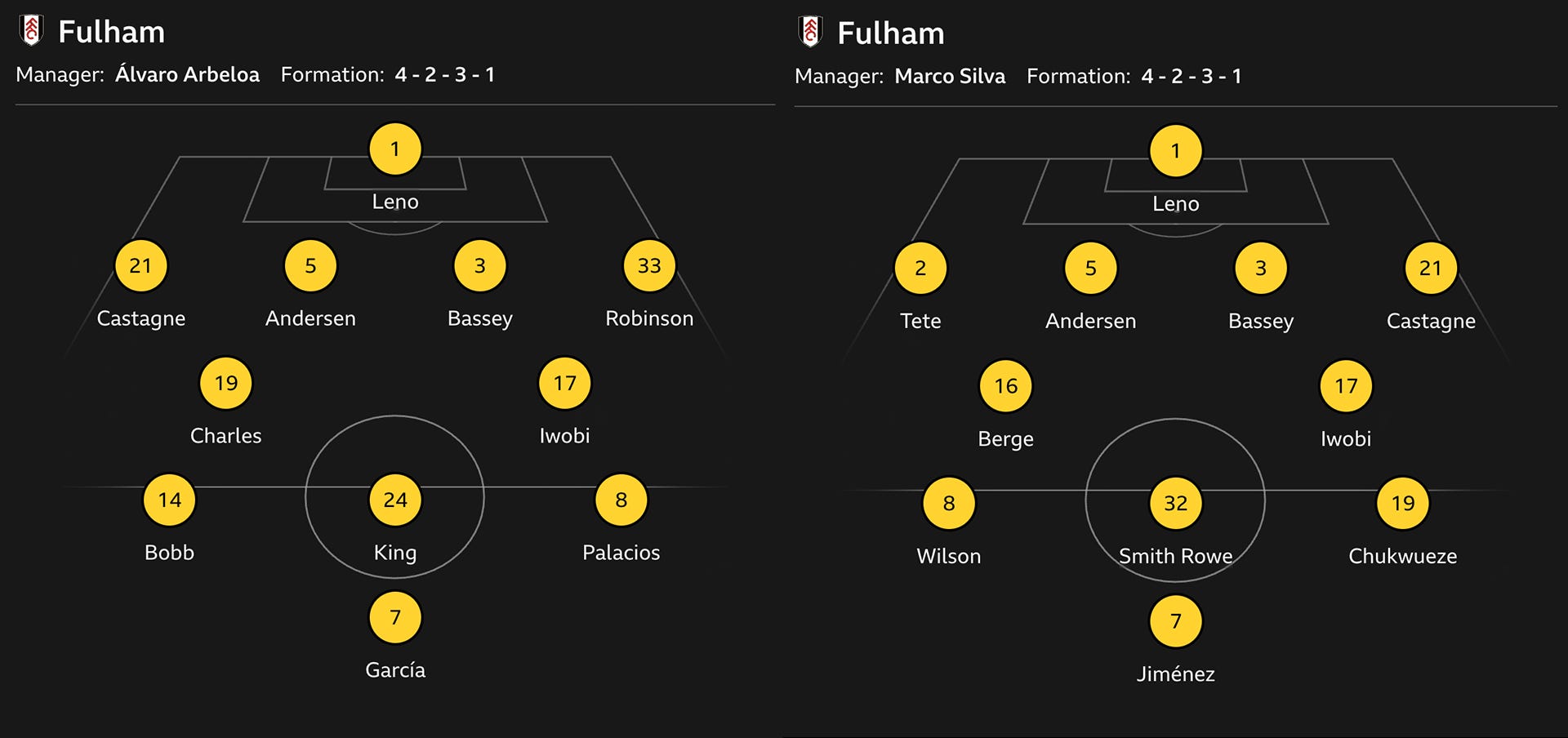
But Alvaro Arbeloa asks his team to do very different things to Marco Silva. Under Marco, Fulham mostly attacked down the left hand side of the pitch, using Antonee Robinson’s natural athletic ability to get up and down that flank or Ryan Sessegnon’s innate forward thinking, meaning that we pretty much always tilted leftwards. Interestingly, the way we would then switch play is part of the reason that Harry Wilson was able to get so many one-on-one opportunities to jink inside his full-back and get shots off at goal last season. This is what Silva’s shape looked like much of the time:
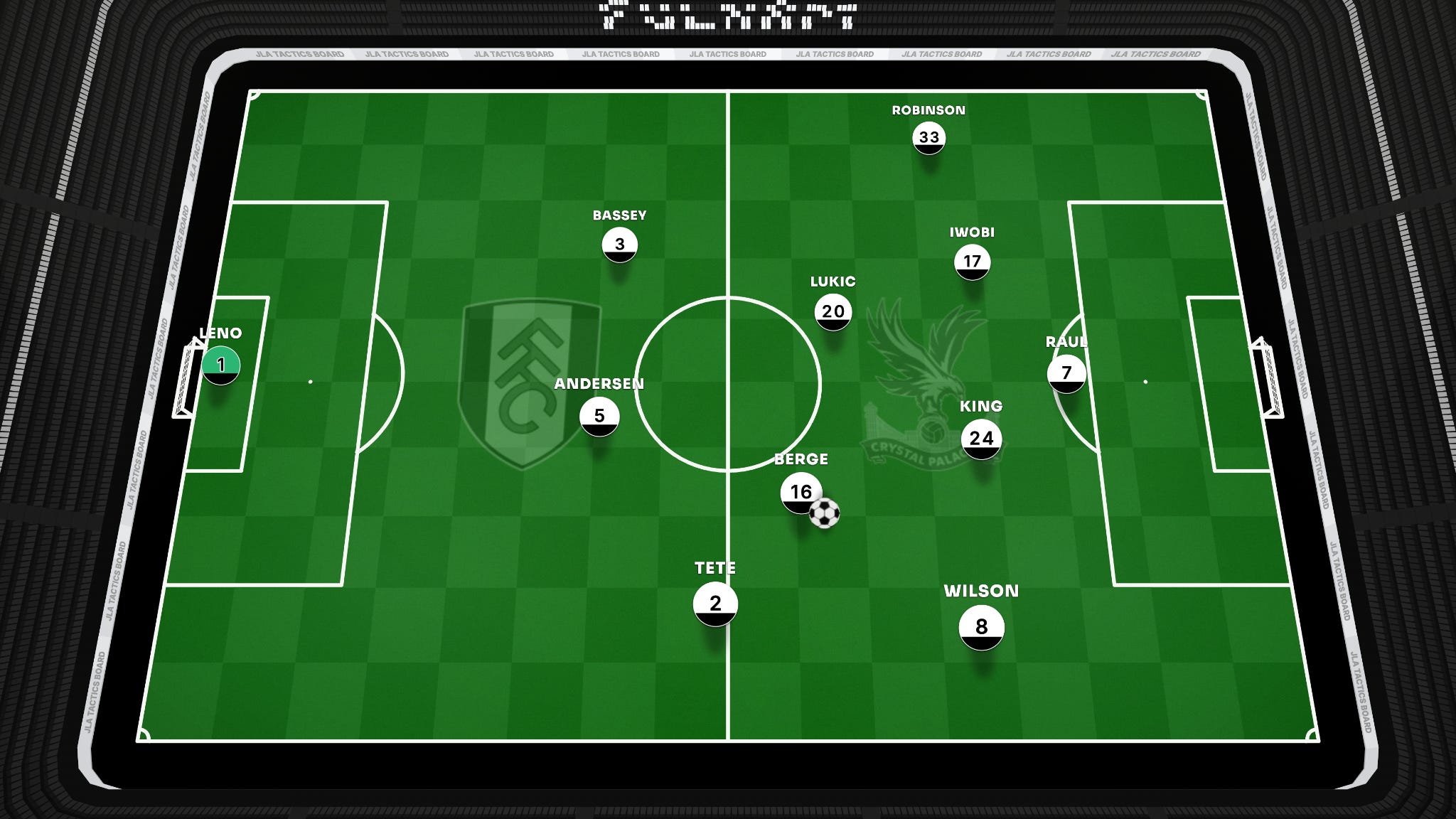
A hallmark of those four Premier League years was inverted wingers, but with a focus on the left sided player coming inside into the 10 position - it was Willian at times, it was Iwobi, it was Reiss Nelson, Kevin, etc. That left-sided triangle, which here is represented by Lukic, Iwobi and Robinson, was highly important to the way we attacked.
Now, here’s an actual example of Silva’s left tilt with the actual team we played against Palace in the 2024/25 season, and notice the shape of the five players in the middle of the park:
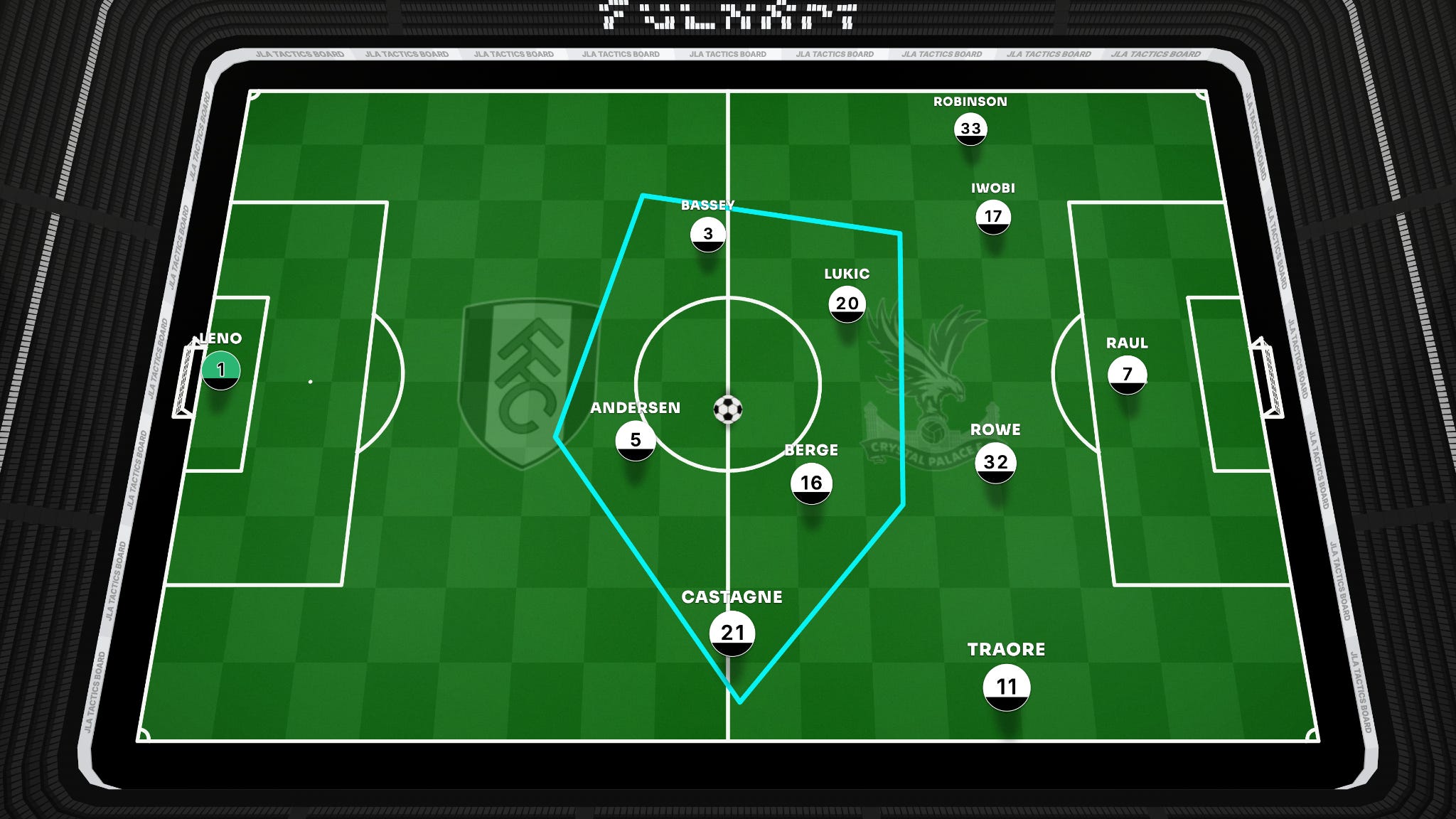
This is important, because it is a crucial differentiation between what Silva was doing in his rest defence, which we will contrast with Arbeloa.
It didn’t always work the same way, however. Antonee Robinson was a pretty crucial component to much of it, and last year he missed much of the season. In Robinson’s absence, Fulham had to find other solutions.
One of those was flipping the tilt, which we saw in December 2025 - last season - again against Palace. This time it is Tete pushed forward with right-footed Castagne inverting, while there is a left-footed winger in Chukwueze holding the width on the other side; but you can still clearly see this 3+2 defensive set to try and deal with the counter.
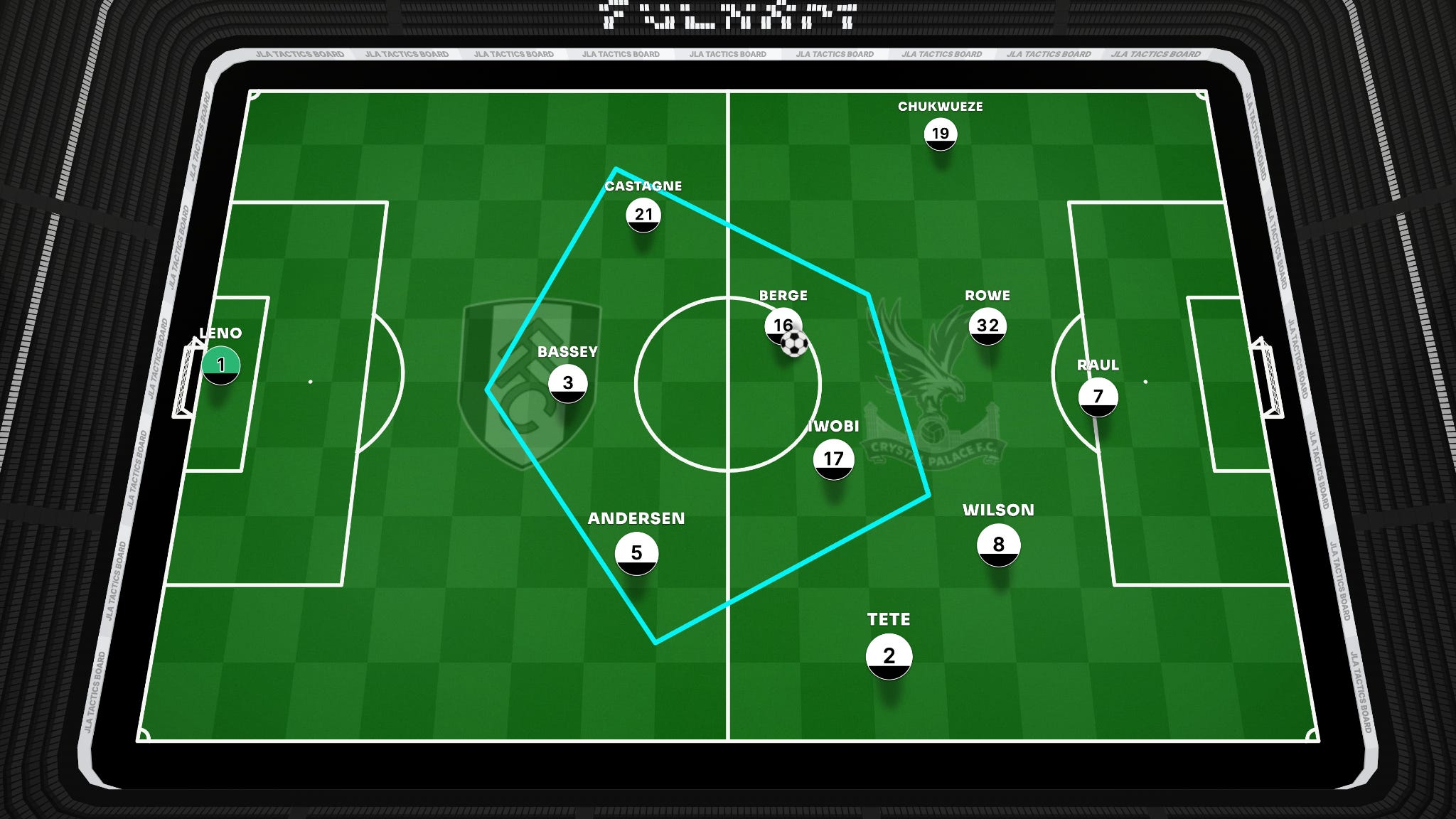
This was not a perfect system (Fulham came up short in this game), but Marco’s rest defence tactics, whichever way we tilted, generally meant that very rarely were Fulham completely scythed through, very rarely were we not competitive, and very rarely did we look at the kind of sixes and sevens defensively that we saw this weekend just gone.
This is because Arbeloa is employing a RADICALLY different way of playing the game, and instead of having five players in the rest defence, there are just three.
Off the bat, right now, I don’t think you can succeed in the Premier League this way. It’s too chaotic, and if you want to try and outgun teams, you need to be technically superior to them almost across the board. That is a very, very big gamble in a Premier League epoch where big spending from bottom to top has been normalised and every team has the capacity to bring in high levels of technical talent.
Here’s a visual of what Arbeloa’s system in possession looked like for much of the game at the weekend.
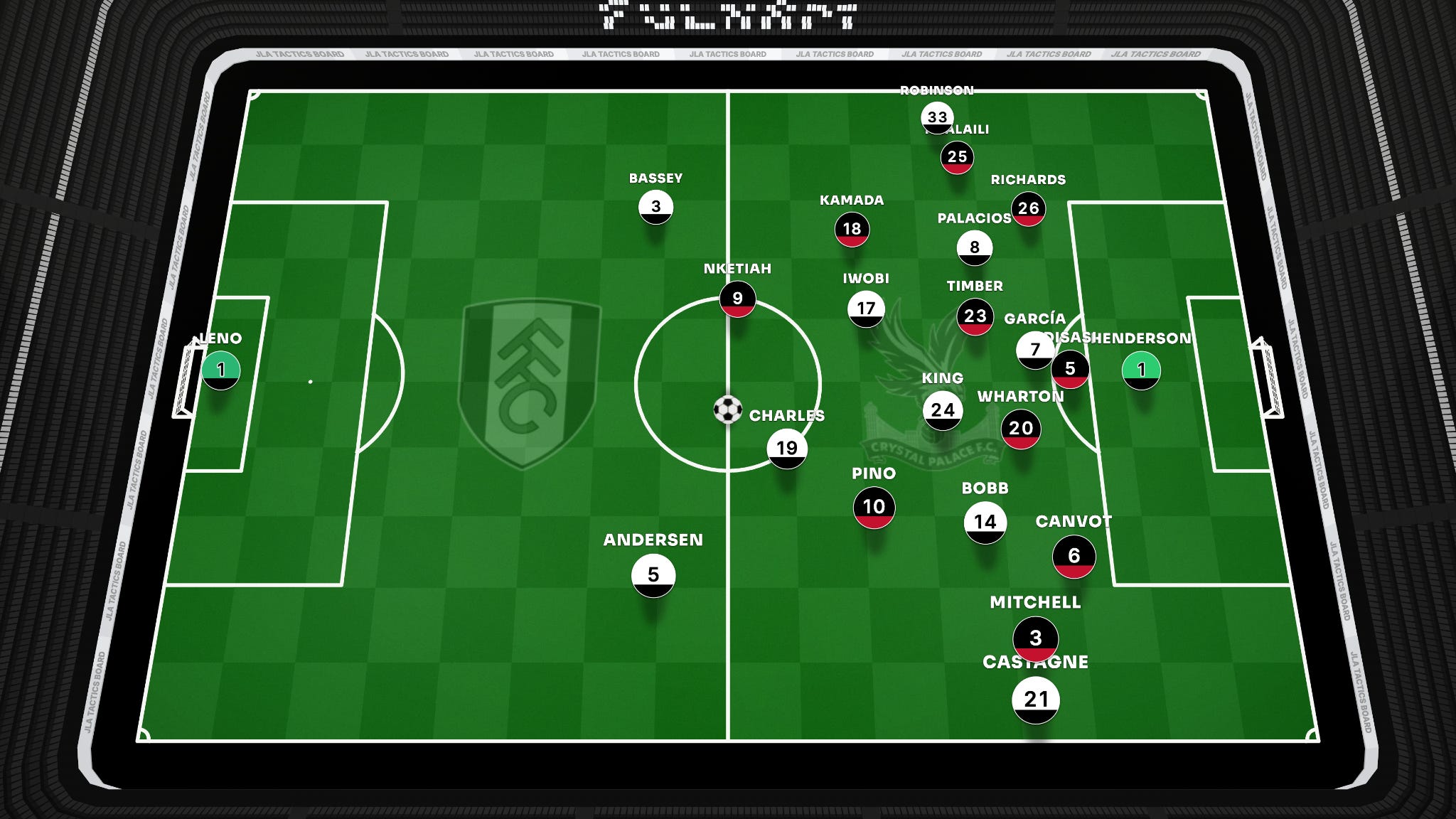
Before we break this down defensively, it’s worth pointing out what Arbeloa is trying to do in the final third with the ball. The attacking elements of this system are, for the most part, working as they are supposed to. The wide players are not supposed to stretch the pitch in the same way that they did for Silva - instead, it’s the full backs being asked to provide the width on both sides of the field.
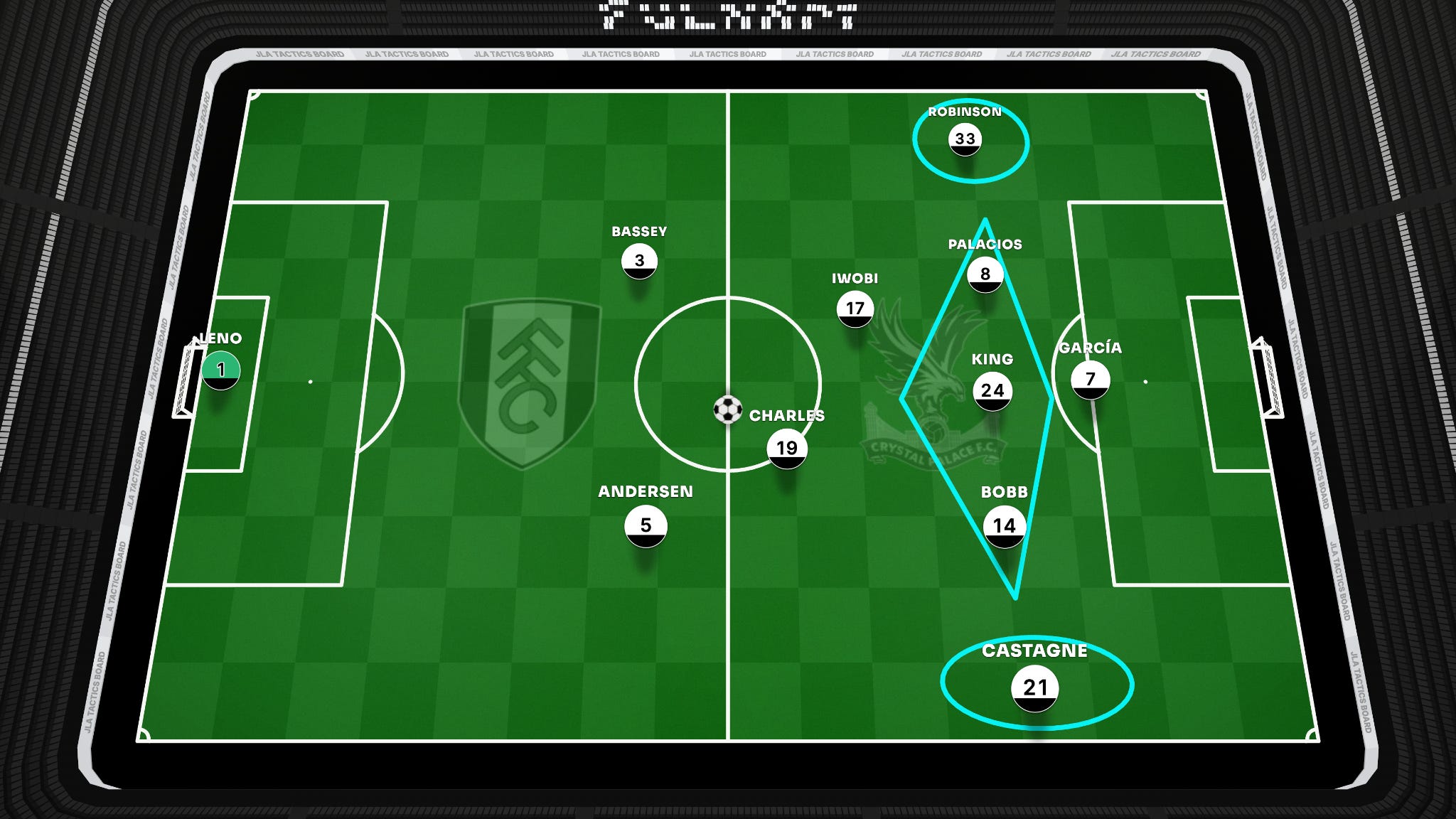
This is clearly playing to their offensive strengths, and you can see why - King, Bobb and Palacios are all extremely gifted technicians who thrive on close range interchanges, one-touch passing and manipulating their way round small spaces, rather than exploding into open space. Garcia is a mobile, cerebral centre-forward who works his way around the line and wants to be slid through into central shooting channels; and both Castagne and Robinson, with their ‘licence to kill’, are players that want to attack the channels.
Arbeloa is trying to induce chaos going forwards, pulling opponents all over the place and dismantling their defensive structures. While that is not coming off perfectly just yet, there is plenty of reason to believe that as players become more comfortable with the system, they will become even more adept at picking apart opposition blocks and creating goalscoring opportunities - but, as ever, there is a tradeoff - because chaos is the opposite of control.
The chaos makes us very watchable going forwards. Arbeloa’s Fulham have already had the most touches in the opposition box of any side in the Premier League this season. At the weekend, his side far outmatched Crystal Palace in terms of xG, dominated the ball, had 25 shots - and gave up six big chances, while only creating two ourselves. SIX.
And therein lies the major problem with this system, because without control you can be burned at the other end of the pitch pretty quickly. The defensive set in this looks like a 2+1; and three players covering this much ground is simply not feasible with the physical capability of the modern Premier League. In easy terms, on the slider between chaos and control, Fulham are dialled in at way too far towards the chaos end of the spectrum.
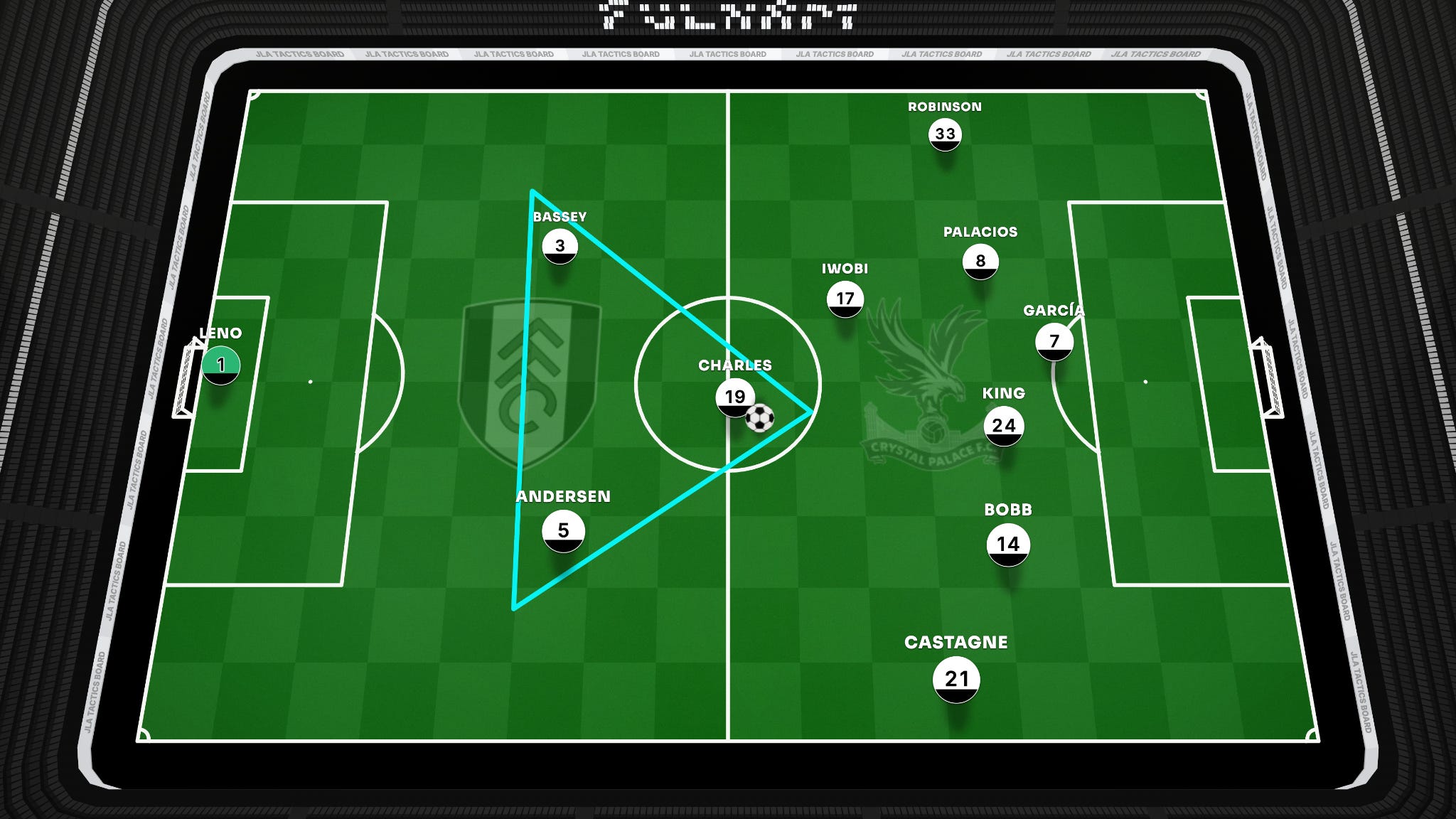
This is a structural issue, and it manifests in a way that almost everybody can see in the nature of our defensive haphazardness.
The goals that Fulham conceded at the weekend were defensively sloppy, but in particular with the second and third goals, the amount of scrambling backwards is terrifying to witness. This is the kind of thing that happens when you do not set yourself up properly to defend in transition.
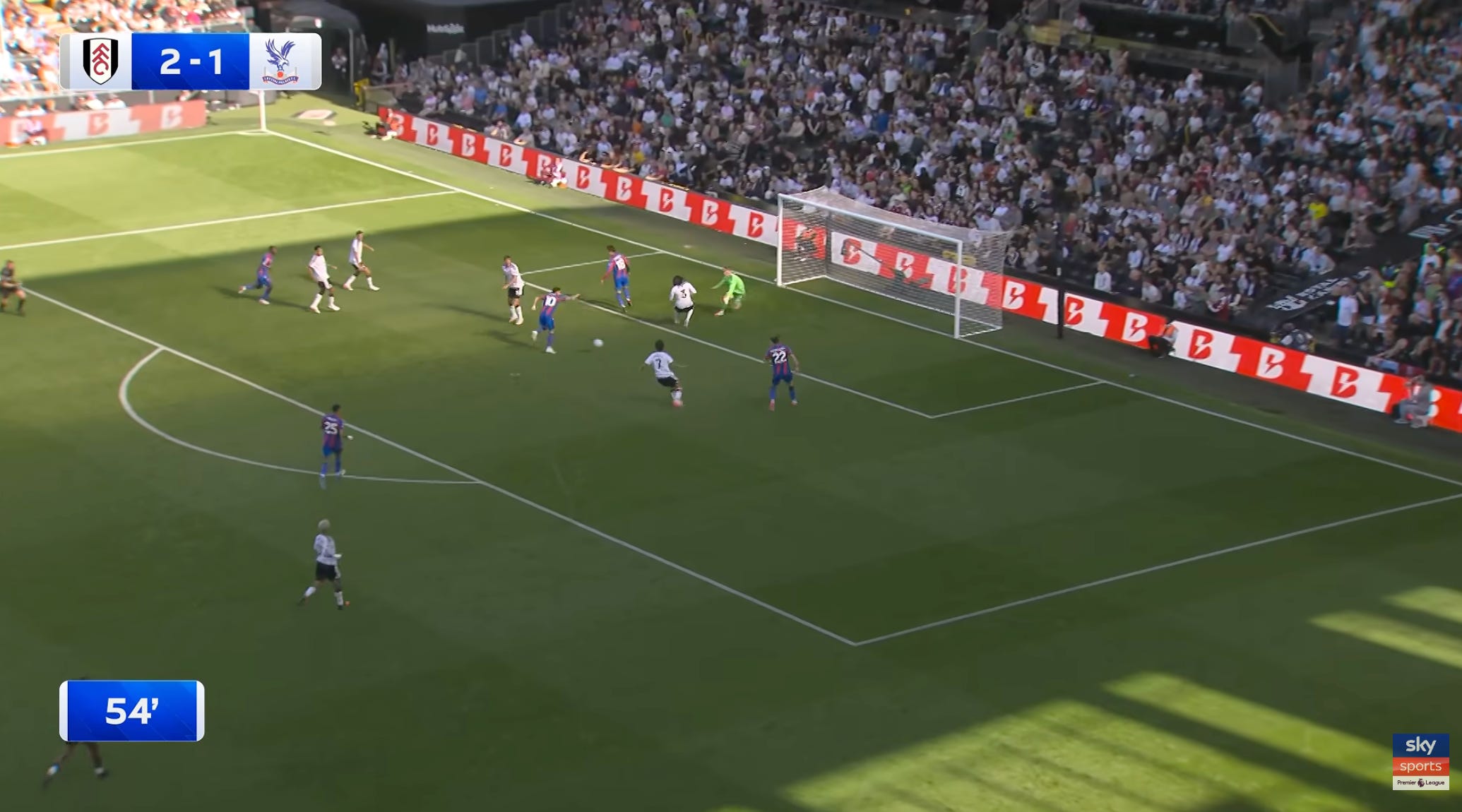
While there is definitely some merit to the fact that Gonzalo Garcia’s workrate meant he was in the back line defending for that second goal, you have to wonder about why he was being asked to be in that position when there should have been five players better placed than our centre forward to do so - and who might have defended rather less like a centre forward as well. And if this is a catastrophe that could have been a renaissance painting, the third goal is even worse.
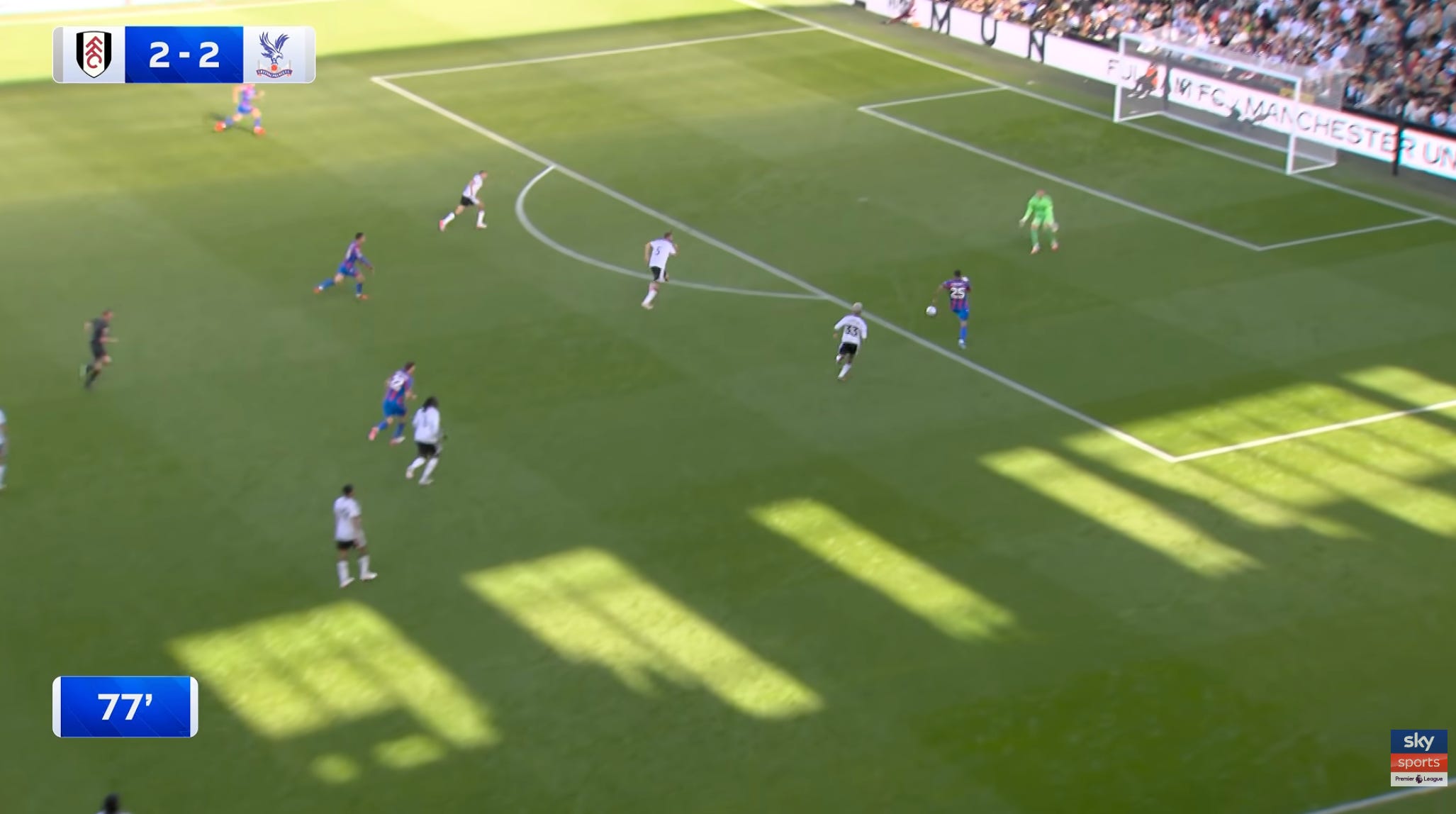
I don’t know what to say about this really, apart from teams that defend like this get relegated. It was like watching a car crash in slow motion. So, are there solutions and why does Arbeloa keep picking this particular midfield if we feel like we’re being bypassed too easily?
From an attacking perspective, I can completely see why Arbeloa decided to go with Shea Charles rather than Sander Berge in midfield, even if a lot of us were expecting to see the two of them together - Alex Iwobi’s on-ball threat is so much greater than either of them can offer, and it allows Fulham to progress the ball into the final third where Arbeloa wants to create the multiple overloads spoken about before.
Of all the Fulham squad thus far this season, Iwobi has covered more ground than anyone besides Josh King, and he leads the side in both line-breaking passes and switches of play - he has been the deeper-lying conductor of Arbeloa’s attacking orchestra from an in-possession perspective.
Charles came in and immediately rose to the top of the list for recoveries, defensive contributions and interceptions per 90 minutes - he is clearly suited to the enormous defensive responsibility and workrate that comes with being the base of an Arbeloa midfield. But even with this addition to things, the pairing currently selected is doing a lot of work in pushing that aforementioned slider away from control.
This should not be taken out of context - I find the weirdly prominently slung-around theory that Alex Iwobi does not have an effective workrate to be absurdly lazy commentary when you actually watch him. Iwobi bustles around in midfield, and at no point in his Fulham career has it ever looked like he’s downed tools or lacked effort. Iwobi has been one of our best players from the moment he walked through the doors at Craven Cottage, and continues to be to this day.
But he is a risk taker in possession, which means that in this two man midfield in particular, you increase the threat of losing the ball, and opening yourself up to transitional threats that we are not structurally sound enough to deal with right now. Last season we spoke a lot about needing extra creative threat from deep areas because the partnership of Lukic and Berge lacked the ability to punch the ball through the lines, but the system is now somewhat different and therefore needs alternative solutions.
There has been a lot of discussion around the idea of David Affengruber’s introduction, or playing a defensively-minded double-pivot in midfield of both Shea Charles and Sander Berge, for example. I think both of these things will probably help cover up bits of the problem, but I don’t think it gets to the root of it.
Most top teams, possession-heavy, attack-minded teams attack with five and defend with five. Even with a faster centre-back, and an extra defensive midfielder, Fulham would be currently one short in that regard.
Truthfully, right now, and especially with the width that the two centre-backs are being asked to occupy, Fulham look like a team playing a three at the back system that is missing its central centre-back.
In some ways I wonder if that’s actually the answer - I’ve seen some Spanish language accounts discussing the idea that at the moment, no one in the Fulham in midfield is dropping into the central areas, but even if our most defensively-minded midfielder did split the centre-backs in order to form a three-man backline, who is dropping into the line in front of that to protect them in transition?
None of this is to suggest that Arbeloa can’t adapt; he is a young manager, still perfecting his own philosophies on how the game can be played, and who has been given solutions late in the window to try and shift the balance of how this team has started the season.
Maybe he sees what this has looked like so far and tweaks his system so only one full-back bombs forward at a time, which would look much more similar to Silva’s old Fulham.
Perhaps he tries Alex Iwobi in a spot further forward but asks him to invert and drop a little deeper to form more of a three man midfield trio in possession; or maybe there is a switch to a three-at-the-back system.
We don’t yet know what solutions that our new manager has to a glaring problem with his team. What we do know is that he needs to find them, and find them quickly, or this is a team who are going to ship goals for fun, and that usually has one, trapdoor-related, outcome.
Thoughtful and added value commentary. Agree with current set-up we will ship goals. Presumably he HAS to try something different at Anfield
Jack is just the best. Up the Irish whites 🇮🇪🤍