


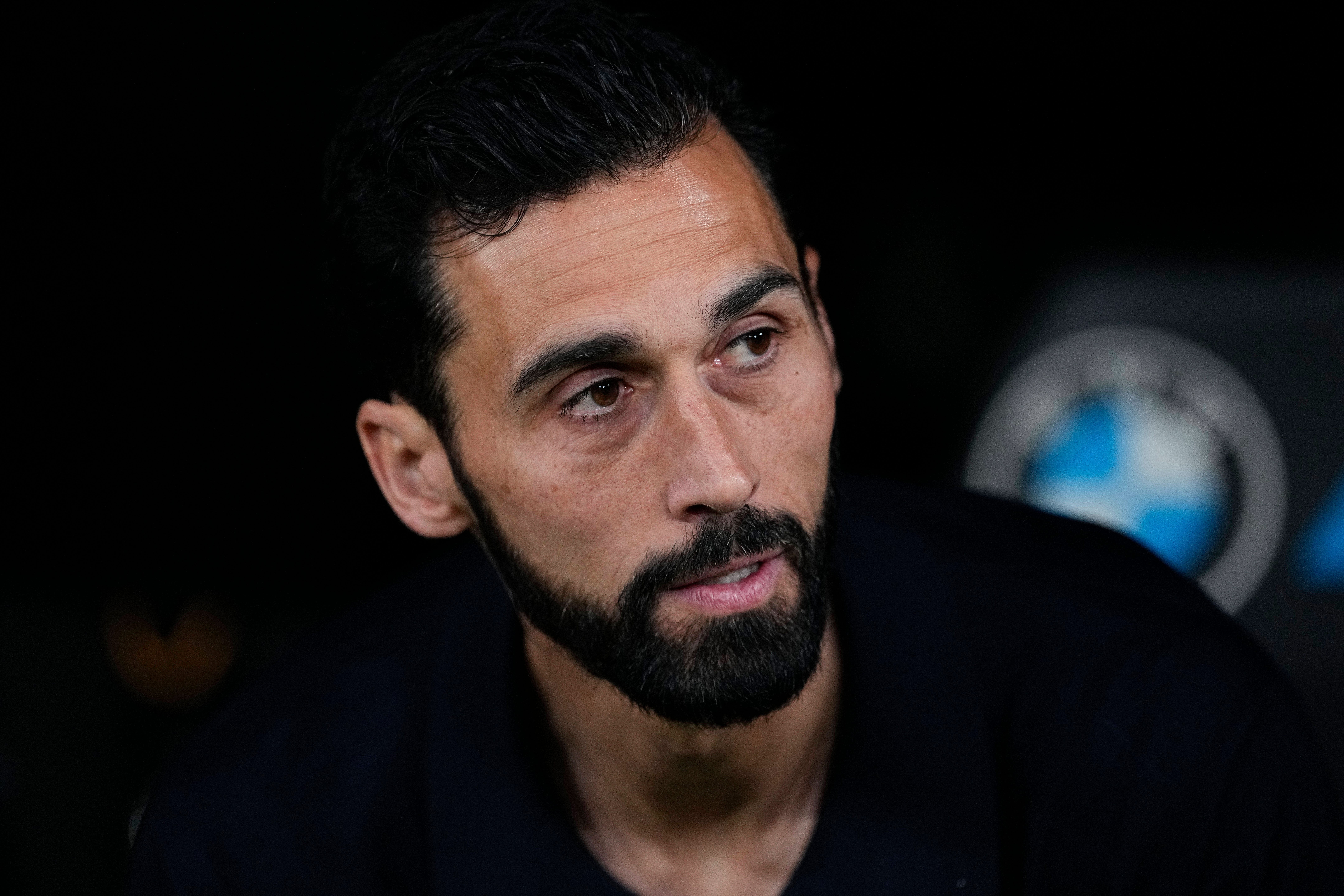
Following our defeat against Ipswich, social media has been flooded with fans demanding Arbeloa’s head just six league matches into the new manager’s tenure.
The arguments most fans wave against him are primarily sporting ones, focusing on our apparent inability to close out matches, our failure to hold onto leads, and the fact that we currently sit rock bottom of the table with just two points.
Critics of the manager also point fingers at this summer’s transfer window. There is a widespread belief that, due to his influence or direct request, we signed three players who seemingly aren’t living up to expectations, like the three Real Madrid academy graduates.
While I can understand the underlying logic behind these sporting complaints, a rather separate narrative is taking root among the social media fanbase. Word is spreading that Arbeloa is arrogant and that he looked down on Fulham the other day with his references to Real Madrid, his former club.
Of course, if Arbeloa truly isn’t the right fit for Fulham, it is only logical for fans to call for his departure.
But would Fulham actually benefit from a managerial change at this stage?
Here are my five reasons why we need to keep a cool head.
1. We must give Arbeloa’s transfer strategy time to pay off
The transfer policy pursued this summer was obviously heavily influenced by the man in the dugout.
We know for a fact that he personally brought in David Affengruber; the Austrian defender himself confirmed they spoke multiple times and that he fully identifies with the Spanish manager’s footballing philosophy.
We also know Hugo Larsson had a conversation with him that left him enthusiastic about moving to London.
As for the Real Madrid academy signings — a feat that shouldn’t be underestimated, given how few Premier League clubs get the chance to fish for young talent there — it is fairly obvious Arbeloa suggested them.
In the transfer window, we heard a long list of targets, especially right-backs, center-backs, and wingers, that never materialized. Hours before the deadline, we were all left wondering if we would secure any reinforcements at all. Finally, Larsson, Manuel Angel and Affengruber came.
During pre-season and the first matches, many fans even labeled existing squad members as “new signings” due to their excellent performances: Iwobi thriving on the wing, Castagne locking down his starting spot, Muniz (who has already scored more goals than last season), Bassey establishing himself as a leader, Oscar Bobb scoring his first goal for the club before netting for his national team...
Yet, the player truly breaking boundaries is Josh King. He wasn’t hyped as a marquee signing, but he belongs on this list; King recently confessed that Arbeloa has given him immense confidence and the freedom to drive the team forward. He concluded by expressing his deep gratitude to the manager.
Furthermore, individual performance metrics for speed, passing accuracy, clearances, tackles, shots on target, chances created, and goalkeeper saves consistently feature Fulham players near the top of the Premier League rankings.
This highlights a crucial point: several key players have seen their individual performances positively impacted by Arbeloa’s arrival. This extends to our academy as well, as we witnessed the debut and active involvement of several talented youngsters in the cup matches.
Most importantly, our summer signings were specifically profiled to implement Arbeloa’s vertical, high-pressing, and fast-paced style. The clearest example is Affengruber.
I haven’t seen a single tactical journalist or casual fan drop David from their preferred starting XI. He offers something entirely different from our other centre-backs. We saw his impeccable debut at Anfield, where his performance played a massive role in securing a point few imagined we could get. He has adapted seamlessly to the new system.
The three Madrid academy graduates are undeniably talented. Gonzalo has become a regular starter, while Palacios and Manuel Ángel usually feature in the rotation and cup games.
Remarkably, Gonzalo ranks second in the entire Premier League for sprint speed and sits near the top for shots on target. While he needs to be more clinical — and there is certainly room for improvement there — he is consistently generating chances. Meanwhile, Palacios has already found the back of the net and has improved tremendously since opening day.
Manuel Ángel and Larsson have featured the least so far, likely due to a lack of match fitness and being the last to arrive, yet they haven’t put a foot wrong in the minutes we’ve seen them play.
I must also mention Shea Charles. While general consensus labels him a Tony Khan signing, he has clearly become a fundamental piece in Arbeloa’s system, anchoring the midfield alongside Berge, a role he fits like a glove.
Bringing in a new manager right now would mean introducing completely different ideas, a new model, and a fresh system.
Under a different coach, these specific signings would likely lose their purpose and struggle to adapt quickly or effectively.
2. We cannot afford to start another managerial rebuild
Stepping into a team well into the season, having only three or four days to prepare for your first match, and being expected to win is an incredibly tall order. We are at a stage where every single point is worth its weight in gold.
A hypothetical new manager would be forced to treat their first five to seven games as an improvised pre-season, which paints a far from promising picture.
It is entirely normal for new managers to lose matches early on. They don’t fully know the squad, and they are forced to build their tactical framework on the fly using players they still need to evaluate and discover.
Realistically, experiencing that trial-and-error process mid-season would mean throwing away points in “experimental matches.” And let’s be clear: we cannot afford to drop those points.
Imagine finding ourselves in December, two weeks into a new regime, facing consecutive defeats blamed on “the time required to adapt to a new system”—which is almost exactly what would happen. We would be dragged right back to square one in August, with lethal consequences for our survival hopes.
Therefore, the wisest decision is to make no reactionary decisions regarding Arbeloa and let him work in peace. Doing the opposite would only multiply the chaos a hundredfold.
3. Our performances suggest results will eventually improve
Cast your mind back to the fan reactions after the West London derby against Chelsea. Many remarked that it was a defeat that almost tasted like victory.
Why? Because they witnessed a glimpse of an emerging, highly aggressive style where we clearly dominated possession. Fans saw players fighting tooth and nail, running, pressing, and dictating play with 60% possession against Chelsea’s 40%.
Individual defensive lapses against world-class opposition ultimately cost us the match, and I can’t help but think that if we had Affengruber available back then, the final score might have been very different.
Granted, optimism waned following subsequent defeats, but underlying statistics consistently showed that our performances deserved more. Then came the cup successes — a convincing 3-0 win against Wimbledon followed by a hard-fought 3-2 victory against a tough West Ham side — alongside two league draws against Big six teams who felt lucky to escape with a point against us.
Beyond individual metrics, Fulham boasts impressive collective data in possession retention, average speed, pressing intensity, and distance covered. We aren’t being blown away; we haven’t lost a single match by more than one goal. While that is incredibly frustrating, it also serves as a beacon of hope proving this situation is far from irreversible. With the exception of Sunderland, no opponent has truly dominated us. We have gone toe-to-toe with every team we’ve faced.
This points to two clear directives: we must eliminate the silly defensive errors that cost us goals, and we must become clinical with our big chances. I do not place the blame for these individual errors and wasted opportunities squarely on the coaching staff, nor on the players. My view is that we have a 25-man squad and a management team currently adapting to one another.
We have improved significantly since the opening weeks, both individually and collectively. This team competes, dominates, and plays attractive football. However, we cannot forget that six games is a tiny sample size for a squad changing a dynamic embedded over the last five years. Such a massive transition naturally costs errors and points. But breaking this process apart just to start an identical cycle in October or November is reckless.
A managerial change isn’t a magic reset button; it is a highly dangerous leap into the unknown, and quite possibly a catastrophic mistake.
4. Arbeloa deserves to be judged on his coaching, not just his lack of top-level experience
The counter-argument to claims that Arbeloa lacks managerial pedigree unfolds into a compelling list of reasons to back him in our current predicament.
While detailing his entire managerial path would take too long, the best way to evaluate a coach isn’t by typing his name into a social media search bar — it’s by watching his team play and listening to his players.
But first, Fulham fans need to accept one reality: Arbeloa is not Marco Silva. He is neither better nor worse; he is simply different, almost radically so. King explained this perfectly the other day. Arbeloa’s tactical approach, his vision of the game, and his character are entirely distinct, which is only natural.
Succeeding Marco was a massive challenge that the Spanish coach willingly accepted, and it dictates that he needs time to overhaul the system, dynamics, and squad left behind by Silva.
Álvaro Arbeloa holds more trophies as a coach than years spent in management. He is no novice; he is well-acquainted with both winning and losing. Nor is pressure a new concept to him.
It is irrelevant that his prior successes came within a club’s academy system; every manager possesses a blueprint designed to be implemented across any category or league. Arbeloa is a young manager who spent years learning from the absolute best in the world (Benítez, Mourinho, Ancelotti or Zidane), alongside playing four seasons at the highest level in the Premier League and eight in La Liga — he knows these competitions inside out.
No manager is immune to mistakes, but errors are vital to the learning curve. In just eight matches across all competitions, Arbeloa has already shown he is willing and capable of adjusting when necessary. For instance, Palacios started our opening fixtures but has since moved into a rotation role, performing brilliantly in the cup, while we now see an incredibly potent frontline of Iwobi, King, and Bobb in the league.
The same foundational system Arbeloa used to win a historic youth treble in 2023 was the one he deployed to defeat Manchester City years later. It is the exact same system he is implementing here today.
Given how this team is actually performing on the pitch, what logical reason is there to believe that a system proven to work for five years across multiple levels has suddenly failed after six league games, requiring us to sack the staff?
5. We must not let frustration dictate our decisions
When a team starts a season hovering at the foot of the table, it is entirely natural for frustration, anxiety, and a desire for a clean slate to take over.
Conceding late goals in four narrow, one-goal defeats fueled by basic errors only amplifies that anger. In all four matches, we had positive results within our grasp until the final whistle approached.
However, I think it’s incorrect to assert that these late goals are a direct result of Arbeloa’s substitutions, given that those late concessions stemmed from individual execution errors on the pitch, and he hasn’t repeated the same substitution patterns across those four games.
At this juncture, many will ask: “Well, if it’s not the squad and it’s not the manager, who is to blame?” That is precisely when we fall into the trap of making personal character judgments. We dissect every word, every gesture, every expression. We have seen people label the manager as arrogant by completely taking his quotes on pressure out of context—interpreting it as disdain toward Fulham when it was merely a factual reference to the immense levels of scrutiny experienced by anyone who has passed through Real Madrid. We scrutinize every posture on the touchline and on the pitch from a manager and a squad of players who, in truth, feel the exact same burning frustration we do every time points slip away.
This brings me back to the concept of frustration. This isn’t about hunting for scapegoats or demanding heads on spikes; it’s about understanding that a profound structural shift occurred this summer. A shift that demands time, patience, and stability.
This isn’t just something Arbeloa needs — Fulham needs it. And because the club needs it, every single member of the squad needs it, led from the front by the manager.
Nine clubs entered this Premier League season with new managers. You only need to look across the league to see the widespread inconsistency and the difficulties every single one of them is facing in embedding their ideas.
We are at such an early stage of the campaign that a single win can catapult a team up six places, while a defeat keeps you locked in the mid-table traffic.
It is simply too early. There are countless points left to play for. We faced three of the Big Six in our opening six fixtures, enduring the toughest possible start to the calendar, all while integrating key signings who only arrived by matchday four.
Frustration is a natural human reaction. But a referee shouldn’t brandish a yellow card simply because the stadium roars in anger, should they?
I think we must afford this project the time it requires. We need to back the team and stand behind every single player. Every member of this squad is vital, regardless of their stature or age, and every single one of them wears the exact same crest.
Sacking Arbeloa to bring in another manager would only drag us right back to August... except we would be doing it in the dead of winter, which is never a recipe for success. It would force a new coach to mold the squad to an entirely new philosophy in a matter of days, an impossible task. It would subject them to immense pressure from minute one, where any early defeat could instantly trigger panic and a toxic atmosphere. It would completely invalidate our summer decision to transition to a new tactical identity, cutting it down prematurely.
We would almost certainly regret the decision after their very first match in charge. By then, it would be far too late.

Good article. I'm not that bothered about the signings or his comments about RM, I think he was just on the defensive and standing up for himself, I don't read too much into those in isolation.
BUT the collective evidence gives very little positivity to hook onto. Remember, the scoreline against Chelsea actually flattered us, we should have lost by 2 or 3 goals at least, and Chelsea weren't even that good. Also the inmprovements in selection and tactics for the Liverpool game were just the blindingly obvious ones that all us armchair fans could see were needed from a mile away - there was no coaching acumen on display there, it was paint by nunbers stuff. There is also no solid managerial experience we can point too that suggests he can do it - the appointment was a total punt. Neither has he made any clear efforts to build rapport with the players, club or fans, there's no evidenve of togetherness and fight in the absence of coherent tactics. He's not even doing the basics I'm afraid.
He has to go, I'm willing to take the risk because there is no evidence this will get any better because of something AA does.
An article l totally agree with. We could be lying 8th, if Bobb had scored these discussions would not be so fierce. Those looking at Frank, Dyche as a quick fix are deluded. A sulking ESR is not helping the situation