


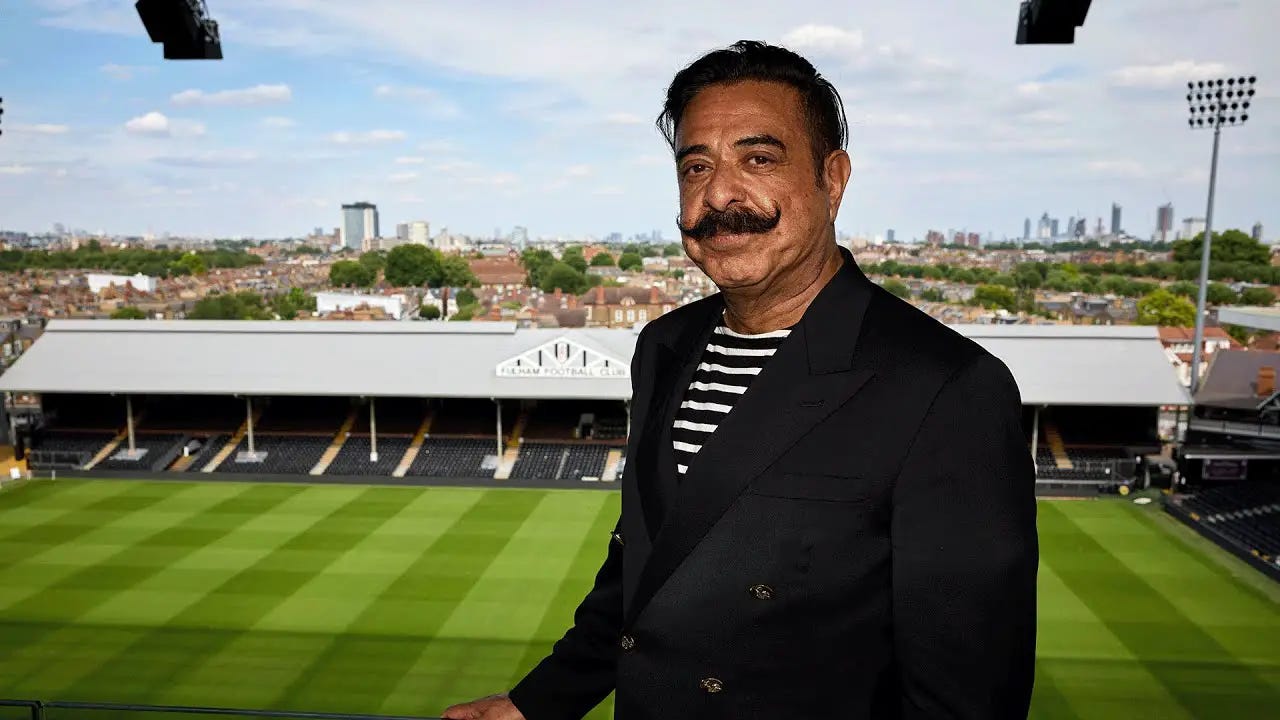
The Athletic recently reported that Fulham is worth between £560m and £620m today. Shad Khan paid £121.1m for Fulham in July 2013 and has reportedly since ploughed in another £788m in improvements into the club. Based on these estimates, Mr. Khan is on track to lose nearly one third – or £300m – of his more than £900m investment in Fulham.
Given the inherent financial constraints facing the club, particularly with the advent of Squad Cost Ratio spending limits, there is one clear way for Mr. Khan to get his money back – by getting us to Europe.
Fulham is an outlier for the Khans. Most of their sports investments have paid off in a big way. Shad Khan bought the Jacksonville Jaguars for $770m in 2011. Even after a $2bn-plus investment in local real estate and the Jags stadium (which Mr. Khan has not funded by himself), Khan’s investment in the Jags has really paid off. The team, according to Forbes, is now worth $5.6bn which, assuming a $2.77bn total investment, means that the Khans have more than doubled their money (with a $2.83bn net gain).
While I know many of us like to make fun of Tony and All Elite Wrestling (AEW), it has been an even better bet for the Khans. AEW recently announced a major TV deal. The Khans invested a reported “eight figures” (so less than $100m) to start the new wrestling federation, which is now valued at a reported $2bn. It’s not been disclosed how much more the Khans have put in all together, but it’s clear that they have made a killing on AEW (potentially more than 10x their initial investment).
Looking at these numbers, it’s not unreasonable to assume that the Khans might just say “screw it”, sell Fulham and take the loss like any smart investor would on a bet that doesn’t pay off. You can’t win them all, and losing £300m on Fulham is not that big of a deal when the family’s total sports investments have gone up in value by over £3bn according to public estimates. But I don’t think that is going to happen.
The thing is, Shad Khan faces almost no financial pressure to sell. He’s self-funded his investments in Fulham. And, he has got much, much richer since he bought the club. According to Forbes, Shad’s total net worth in 2016, just three years after he bought Fulham, was $5.9bn. Today, Forbes estimates that his total net worth is $15.3bn. Most of his net worth comes from his auto parts company, Flex-N-Gate, which he owns outright and, according to Forbes, generated $9.3bn in revenue in 2025.
The company is private so doesn’t disclose its profits, but S&P reports that automotive components suppliers as a category make a profit of close to 10%. So, one could assume that the company generates hundreds of millions of dollars in profits every year for the Khans and any other owners. Shad Khan, and his family, are literally swimming in cash.
Yes, Shad is 75 years old. But the good news is that his sporting heir apparent is our own much-maligned Director of Football, Tony, who presumably is even more invested than his father in Fulham‘s success. It is possible that other financial pressures, like inheritance taxes, could force a sale, but given the Khan family’s very strong financial position, Tony will likely be able to keep Fulham if he wants to.
We are truly lucky in this regard, and in the age of private equity (and largely ROI driven) Premier League ownership, to have owners like the Khans who have the ability to spend, absorb losses, and don’t face financial pressure from partners for immediate returns.
However, the Khans clearly seek to make money on their sporting investments. They are not fans first (like Tony Bloom and Matthew Benham). They want to “win” their bet on Fulham. They (and we) just have the luxury of time in doing so, which is not the case for many Premier League clubs.
So, how can the Khans “win” and make Fulham worth more than they paid for it? The path is actually pretty narrow. The Khan’s and Fulham’s revenue is limited by our size. For example, while the club has been ambitious with ticket price increases – too much so in my view, given the impact on fans – the revenue they can generate on matchday revenues is inherently limited by the small size of Craven Cottage.
According to the football finance site, the Swiss Ramble, an already aggressive Fulham generated £18m in matchday revenue in 2023/24, putting the club close to Everton at £19m and ahead of clubs like Brentford (£11m) and Forest (£14m), but behind other clubs including Brighton (£28m), Aston Villa, (£28m), West Ham (£45m) and Spurs (£106m).
Even if the Khans and Ali Mac increased the average ticket price by another £30 each home game, it would only raise another £16m a year or so if the new prices don’t impact attendance, which seems unlikely. The club’s average attendance, in 2023/24, with already high ticket prices, was just 24,311 (for a club with a seating capacity of close to 30,000, though the Riverside was still partially closed for some of the campaign).
The Khans have to increase the brand value and size of the club if they want to make their investment pay off. Other than suddenly becoming geniuses at transfers, the club’s big areas of opportunity for financial growth are really in broadcast and commercial revenue, which accounted for 91% of the club’s revenue in 2023/24.
That year, £135m of the club’s £182m (or 74%) revenue came from broadcast revenue, putting it behind Aston Villa, West Ham, Brighton who earned £184m, £167m and £164m respectively from broadcast revenues. These clubs also earned £60m, £58m and £31m in commercial revenue (largely from sponsors) compared to Fulham’s £29m.
Fulham is much, much further behind the big six clubs in terms of broadcast and other revenue. They each made more than £360m each from both categories (double Fulham’s total revenue).
If the Khan’s want their investment to pay off, they are going to need to make the team better and get to Europe (and then try to stay there). Yes, it is true that the direct financial benefits in terms of the additional payments for making it to the Europa and Europa Conference League can be limited, but clubs that make it to Europe also increase broadcast revenue and (because of the value of this) can sell more commercial sponsorships.
West Ham getting to Europe, for example, helped increase its broadcast and commercial revenue by nearly £30m in one year. And brands actually penalize big clubs when they don’t make it to Europe. Adidas’s contract with Manchester United has a clause that deducts £10m in payment for every year the club doesn’t qualify for the Champions League. Clubs that can get in - and stay in - Europe have a higher value because of these additional revenues.
According to The Athletic, West Ham (which does not own its own stadium) and Aston Villa (which is not in London) are currently valued at £100m more than Fulham. And Brighton, which has a stadium comparable in size to Fulham (and is not located in London) is worth £50m more. Fulham, as a historic club located in a prime area of London (with its own stadium), could increase substantially in value if we can get to (and stay) in Europe.
Additionally, what if the Club goes in the other direction and gets relegated? It will be financial disaster for the Khans as they will lose the broadcast and commercial revenue they need to increase the value of Fulham.
So, that’s the good news. The club has to get and stay better if the Khans want to increase the value of their Fulham bet. The not-so-good news is that we have no idea if the club will be able to retain Marco Silva let alone if the club’s management team has the skills needed to beat all the other mid-tier clubs trying to do the same thing.
But, fellow Fulham fans, take heart in the fact that we have owners with the financial ability to play a long game and, if they can somehow navigate the new rules, should be very motivated to take us to the next level.

Great read Matt
https://westhamfan.substack.com/p/west-ham-vs-fulham-preview?r=7rygpj&utm_campaign=post&utm_medium=web