


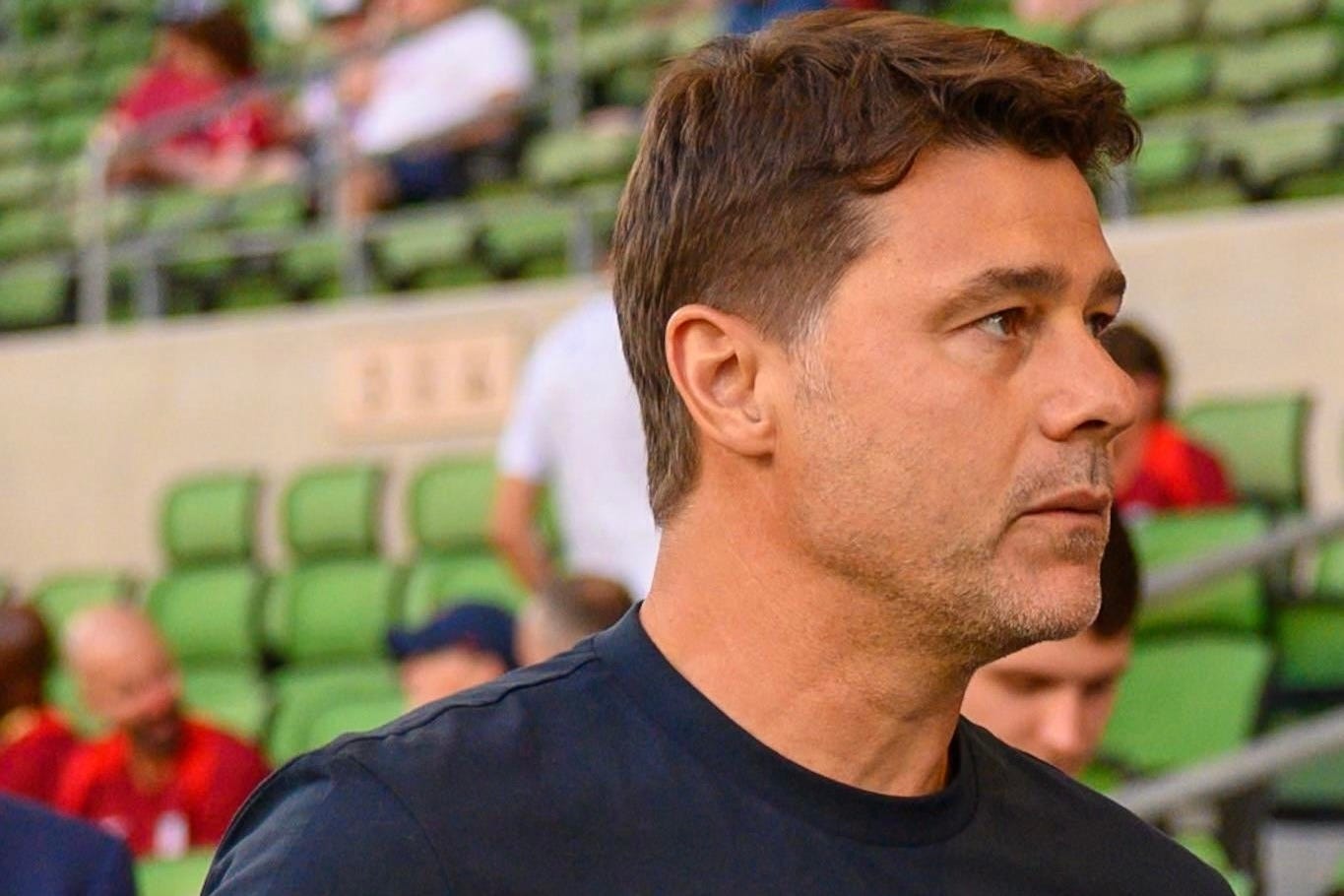
Following Marco Silva’s exit, it’s clear Fulham are entering a transition phase built around younger, more technical attackers and a shifting squad core. The next managerial appointment will define whether the club prioritises immediate Premier League stability or longer-term squad evolution.
Across some of the leading candidates at this stage, there is a clear split between structured development coaches, system-heavy tacticians, and pragmatic stabilisers. Each would unlock different strengths within the current group while also exposing specific structural gaps in midfield balance, wing-back depth, and attacking consistency.
Kieran McKenna
McKenna is the clearest structural fit for this Fulham squad because so many of the key assets are young, technical, and development dependent.
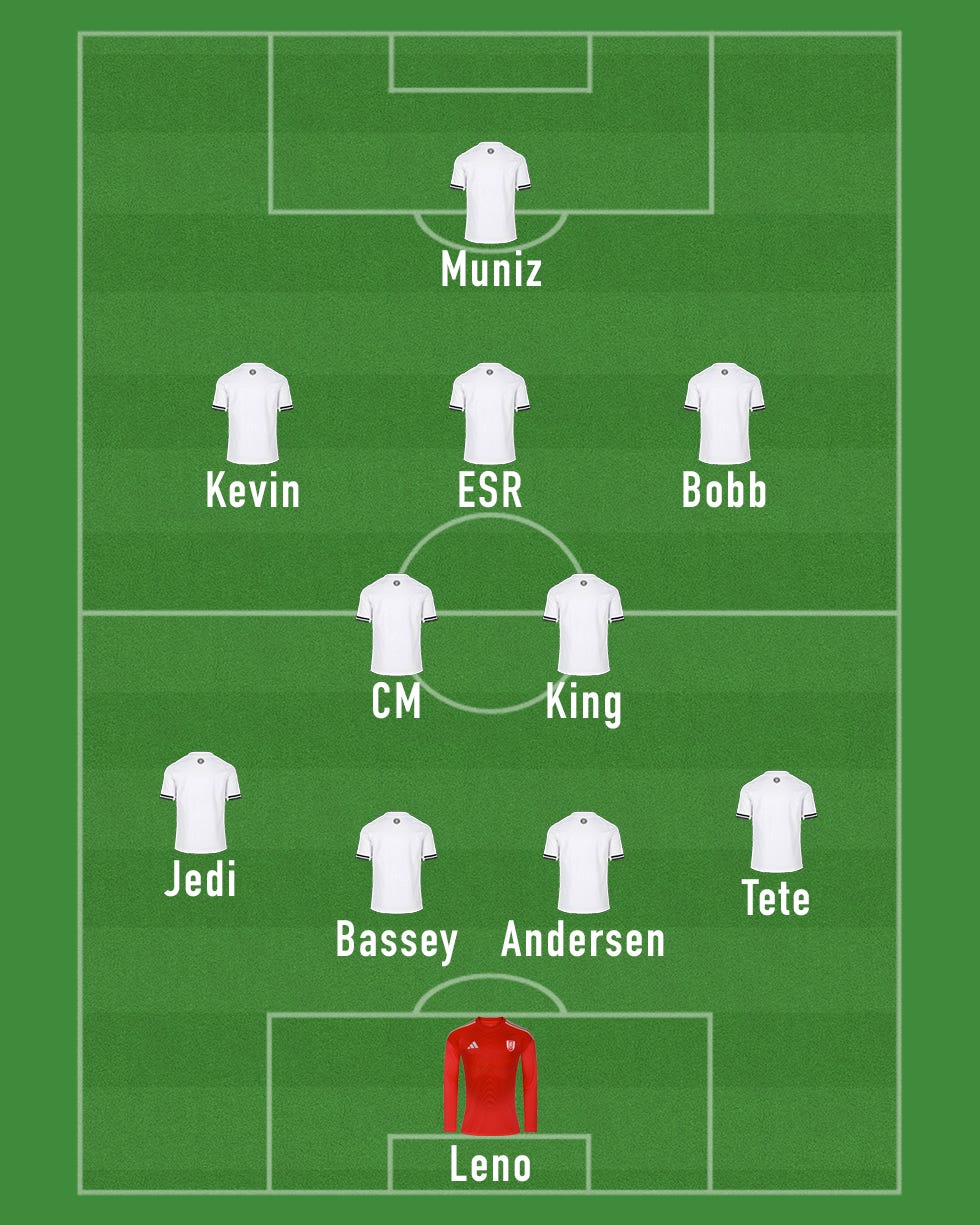
His Ipswich teams show a consistent pattern of improving attacking midfielders and wide forwards by simplifying their early responsibilities before expanding their influence, which maps neatly onto Oscar Bobb, Josh King, Kevin and Emile Smith Rowe.
Bobb would be given a controlled but increasingly free right-sided role, King would be turned into a more of a midfielder who learns tempo control step by step, Kevin would be refined into a more efficient and decisive winger, and Smith Rowe could finally stabilise into a high-output Premier League number ten through structured positioning.
The main weakness is defensive ceiling in transition if players like Saša Lukić or Berge remain heavily involved, as McKenna sides can be exposed if technical control drops under pressure. So I’d expect a new high intensity ball winning defensive midfielder (a la João Palhinha).
Potential winners: Bobb, King, Smith Rowe, Kevin, Robinson
Likely losers: Lukić, Berge, Cairney, Iwobi
Key position to strengthen: A high-intensity, ball-winning defensive midfielder to protect transitions - oh, and an inevitable Liam Delap.
Potential line-up
Ruben Amorim
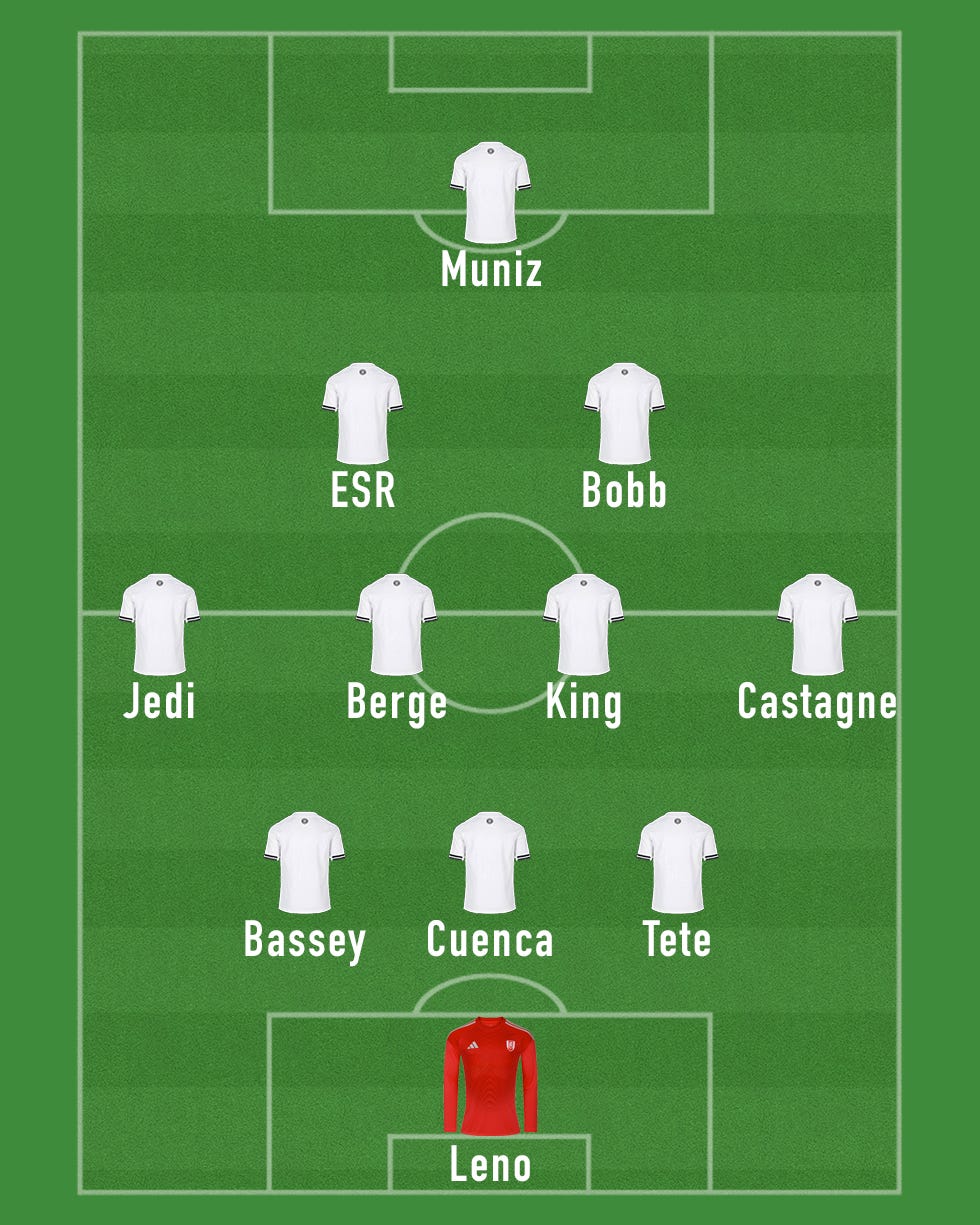
Amorim is the most system-rigid option, and while the current defensive personnel could fit (Bassey, Andersen/Cuenca, De Fougerolles), the squad outside defence is not naturally built for his 3-4-2-1. He would obviously quickly maximise Antonee Robinson as an aggressive wing-back, and either Tete or Luc de Fougerolles could benefit from structured coaching within a back three.
However, the issues start further forward. The midfield options are not yet strong enough for his double pivot, and the attacking midfield group becomes a problem: Bobb, Kevin and Smith Rowe all thrive on fluidity, whereas Amorim demands strict positional discipline and repeatable patterns. Josh King could adapt, but would likely need time before becoming a trusted starter.
Ultimately, Fulham would need several role-specific signings before the system could fully function, particularly in the wing-back positions where intensity and tactical discipline are non-negotiable. Given our transfer business under our DoF, a whole squad restructure to a new tactical system seems incredibly unlikely - and for that reason, I can see this being a car crash.
Potential winners: Robinson, Cuenca, Diop, Tete/De Fougerolles - More spaces in our defence
Likely losers: Kevin, Cairney, Sess
Key position to strengthen: Right wing-back specialist for the system
Potential line-up
Arne Slot
Slot offers arguably the highest technical ceiling but also the highest structural demand.
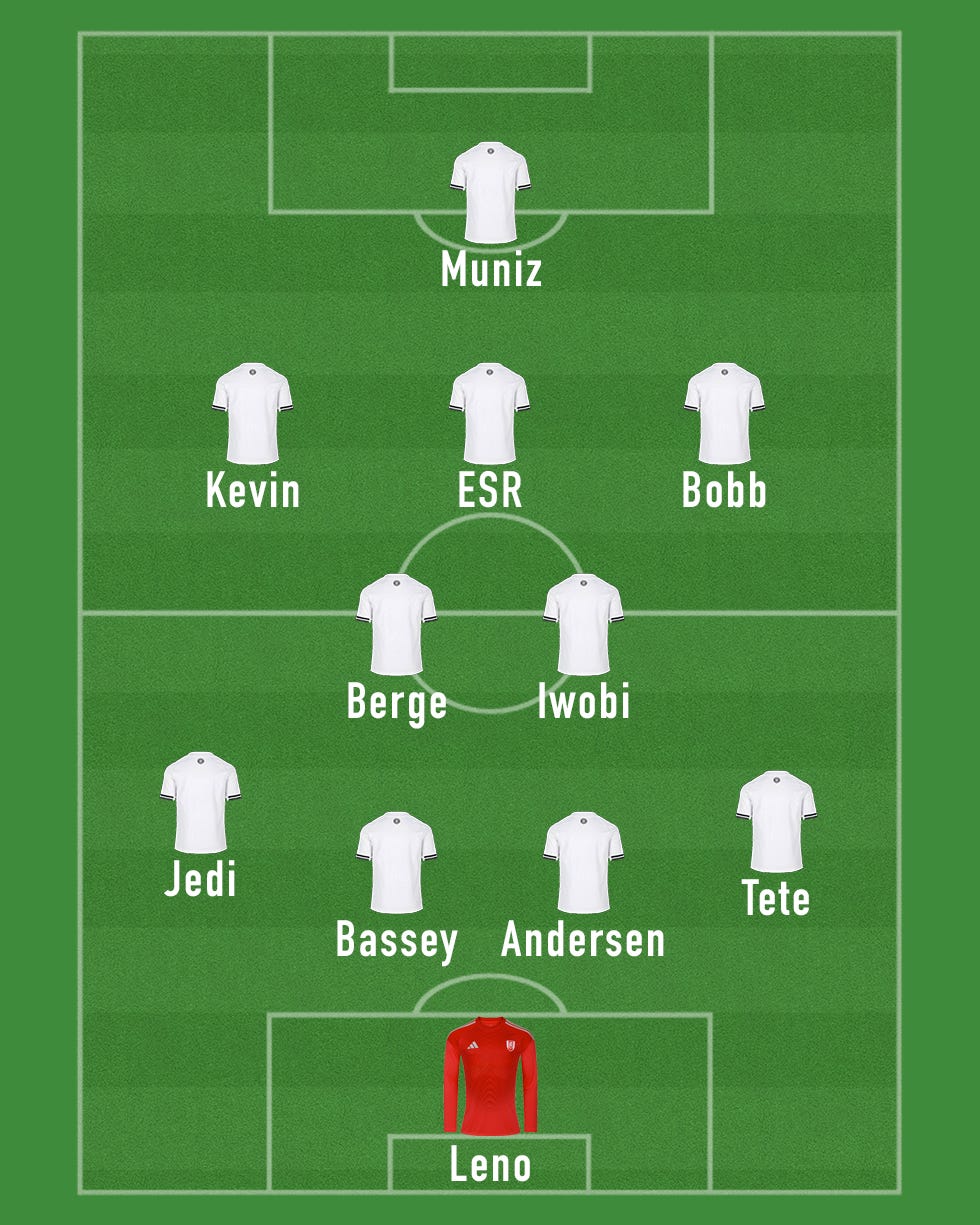
His model requires consistent possession quality and intelligent pressing across the entire XI, which could suit players like Bobb, Kevin and Robinson. Bobb in particular could thrive as an inside forward in controlled possession phases, however his likely system would rely on Sander Berge to become a key progression hub (unlikely).
The first issue is squad agility, with players such as Cairney for sure likely to see far fewer minutes. The second issue is depth: Fulham’s squad still has some variance in technical consistency, particularly in defensive and midfield rotation players, which could lead to instability in Slot’s high-line system.
If it clicks, Fulham could look like a possession-dominant top-half side, but failure points would likely come from defensive transitions and inconsistent midfield control under pressure. Much like Amorim - it’s a risky tactical appointment.
Potential winners: Iwobi, Bobb, Berge, Smith Rowe, Kevin, Robinson
Likely losers: Diop, Cairney, Lukić
Key position to strengthen: Deep-lying playmaker and elite ball-progressing holding midfielder
Potential line-up
Oliver Glasner
Glasner’s 3-4-2-1 system relies on vertical transitions, athletic defenders and direct attacking sequences, all of which align well with Fulham’s strongest individuals.
At Frankfurt and more recently in the Premier League with Palace, he has consistently taken mid-level squads and made them highly competitive, turning organisation and transition efficiency into European qualification and cup success rather than relying on elite individual quality.
At Fulham, Bassey would likely become a dominant wide centre-back, Robinson could once again thrive as a high-volume wing-back, and Muniz could potentially benefit from quicker, earlier service into the box. Kevin also fits well as a transition winger who attacks space quickly rather than recycling possession.
However, technically refined players like Smith Rowe and Oscar Bobb could see slightly reduced influence because Glasner’s system prioritises speed of action over extended possession phases.
Overall, the squad would look more direct, more aggressive, and likely more immediately effective in results terms, with a clearer pathway to pushing towards top-half finishes and realistic European contention if the system clicks quickly. But squad depth as soon as we adapt players to a back three/five, is a nightmare.
Potential winners: Bassey, Robinson, Muniz, Kevin
Likely losers: Bobb, Smith Rowe, Cairney
Key position to strengthen: Second striker or elite goal-scoring forward to complement Muniz
Potential line-up
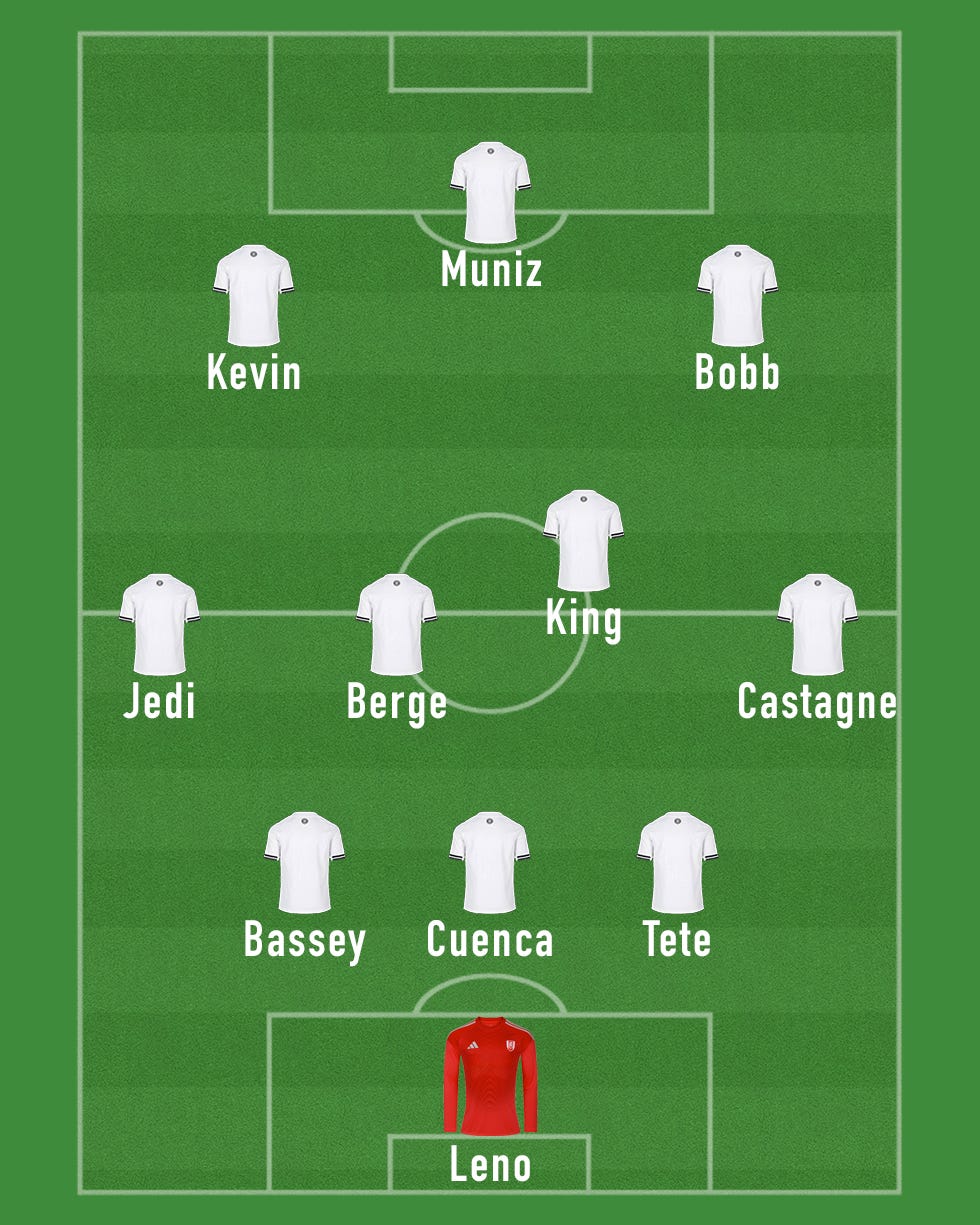
Mauricio Pochettino
Poch would bring a high-intensity, front-foot system built on aggressive pressing, vertical transitions and strong physical conditioning.
While very similar to our typical 4-2-3-1 we currently employ under Marco - Pochettino'’s typical 4-2-3-1 or 4-3-3 relies on full-backs pushing high, midfielders covering large distances, and attackers pressing relentlessly from the front.
At Fulham, this would immediately suit his current USA star squad member Antonee Robinson, alongside Calvin Bassey, whose recovery pace and aggression fit a higher defensive line. But this high line would undoubtedly be the end of Anderson at RCB.
In attack, Kevin would benefit from direct transitions and space to attack, while Bobb could develop into a high-energy wide forward with both defensive and offensive responsibilities. Iwobi could in an ideal world become a pressing 10 with the right instructions with King adapting to a role in the eight. I am confident Poch would have his own list of available forwards - would a Pepi deal resurgence be on the cards?
However, the squad balance presents clear challenges. The midfield group is not naturally built for the physical intensity and press resistance Pochettino demands, with players like Lukić and Cairney potentially struggling with the tempo.
Smith Rowe would need to adapt to a more disciplined pressing role rather than a free attacking position, while Josh King would likely be managed carefully due to the physical load requirements of Pochettino’s system. The biggest adjustment would be overall intensity and squad athleticism, particularly in midfield depth and attacking pressing structure.
One further issue here, is he’s currently USA coach at the World Cup. So the time needed to plan transfer activity with him directly is going limited at best.
Potential winners: Robinson, Iwobi, Bassey, Bobb, Kevin
Likely Losers: Lukić, Cairney, Smith Rowe (role adjustment)
Key position to strengthen: A high-energy, press-resistant central midfielder to anchor transitions and sustain intensity across a full season
Potential line-up
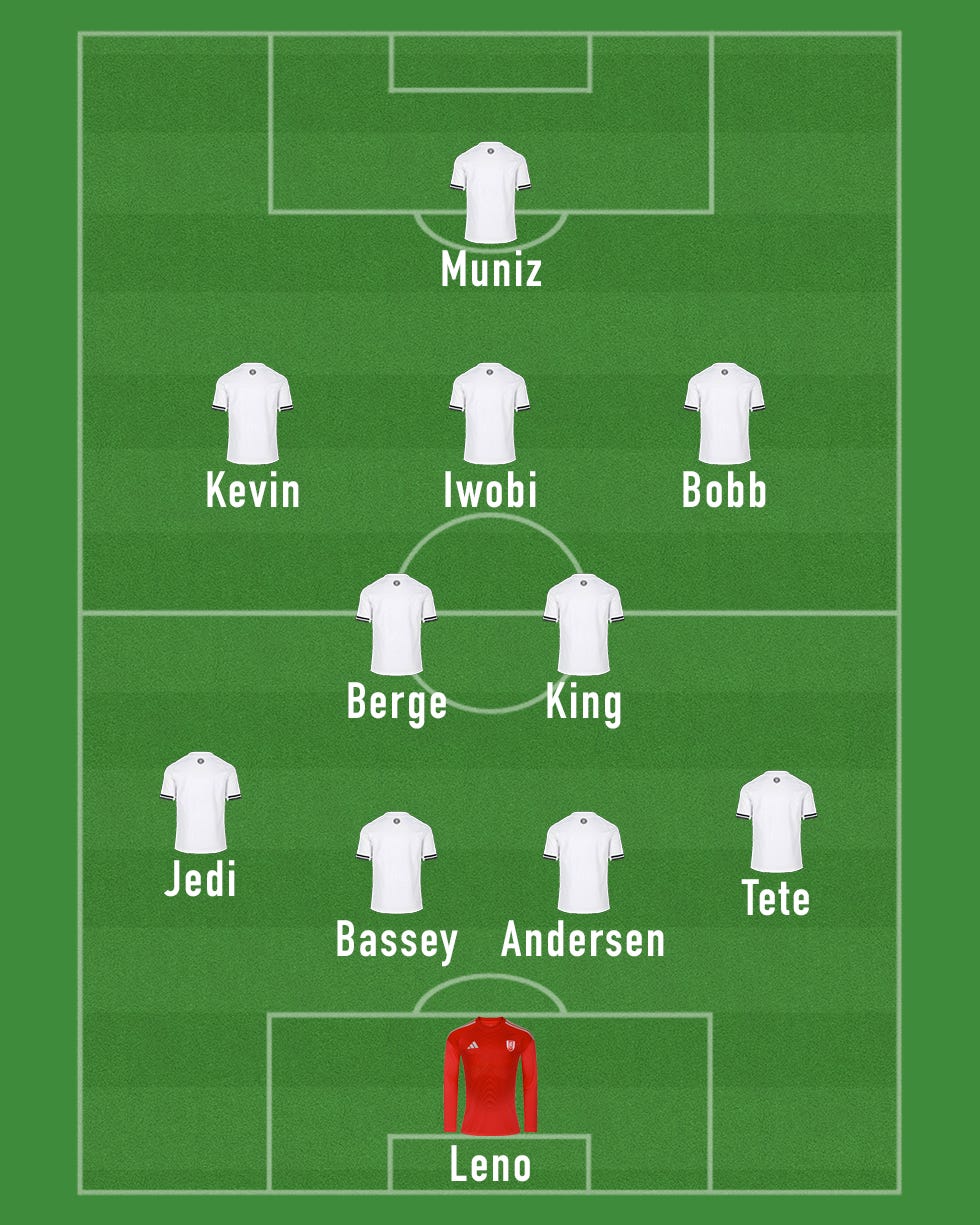
Thomas Frank
Frank would represent a very stable and pragmatically balanced option, built around adaptable structures rather than a fixed system.
His Brentford sides consistently overperform by combining compact defensive organisation, aggressive pressing, and highly efficient chance creation from wide areas and set pieces.
At Fulham, this would suit players like Robinson, Andersen and Bassey, while also giving Bobb and Kevin structured but flexible attacking roles where output is prioritised over rigid positional instruction. Josh King would likely continue to be introduced gradually, as Frank tends to protect young midfielders until their tactical understanding is fully established.
However, the ceiling is the key limitation. Frank did elevate a lower to mid-table squad into a reliable Premier League unit, but his approach is more about optimisation than transformation, meaning fewer dramatic development leaps for players like Smith Rowe or King compared to McKenna or Glasner.
Fulham would become harder to beat, more structured in both boxes, and consistently competitive, but with a slightly lower ceiling in terms of stylistic evolution and elite progression. If the aim here is to take Fulham to the ‘next level’, I am not sure what he’s going to add other than some continued stability.
Potential winners: Sess, Andersen, Bassey, Bobb, Kevin
Likely losers: Smith Rowe, Cairney, Lukić
Key position to strengthen: A dominant ball-winning central midfielder to anchor transitions and improve control in tight matches - Christian Nørgaard incoming.
Potential line-up
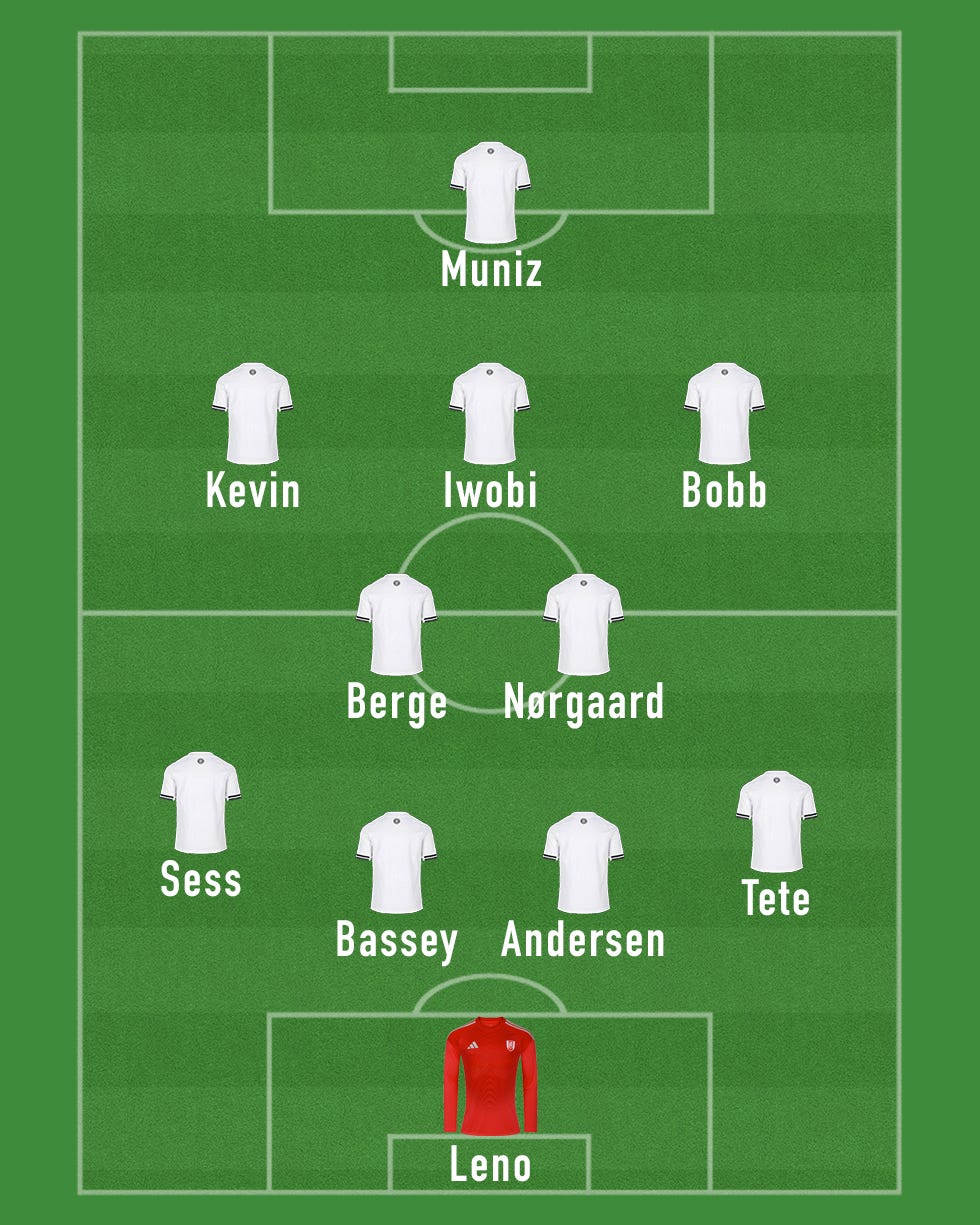
Frank Lampard
Lampard is the most unpredictable fit tactically - and culturally - with the Fulham fans.
Technically he would rely more on general principles than a fixed system. His strength lies in trusting young players, which benefits King, Bobb, and De Fougerolles, and he would likely give them significant minutes early.
However, without a defined structural identity, Fulham risk becoming inconsistent in both pressing and build-up phases. Players like Smith Rowe could either flourish as focal points or drift between roles without clear optimisation. The squad’s technical strengths would be used, but not necessarily maximised compared to more system-driven managers. The ceiling is therefore highly variable depending on recruitment and momentum.
Only if he was an incredibly good fit either tactically, or culturally could I begin to forgive the sins of the past. No thanks.
Potential winners: King, ESR, Bobb, Kevin, De Fougerolles
Likely losers: Lukić, Cairney, Andersen (slightly in structured build-up importance)
Key position to strengthen: Defensive midfield organiser/enforcer to stabilise structure and transitions
Potential line-up
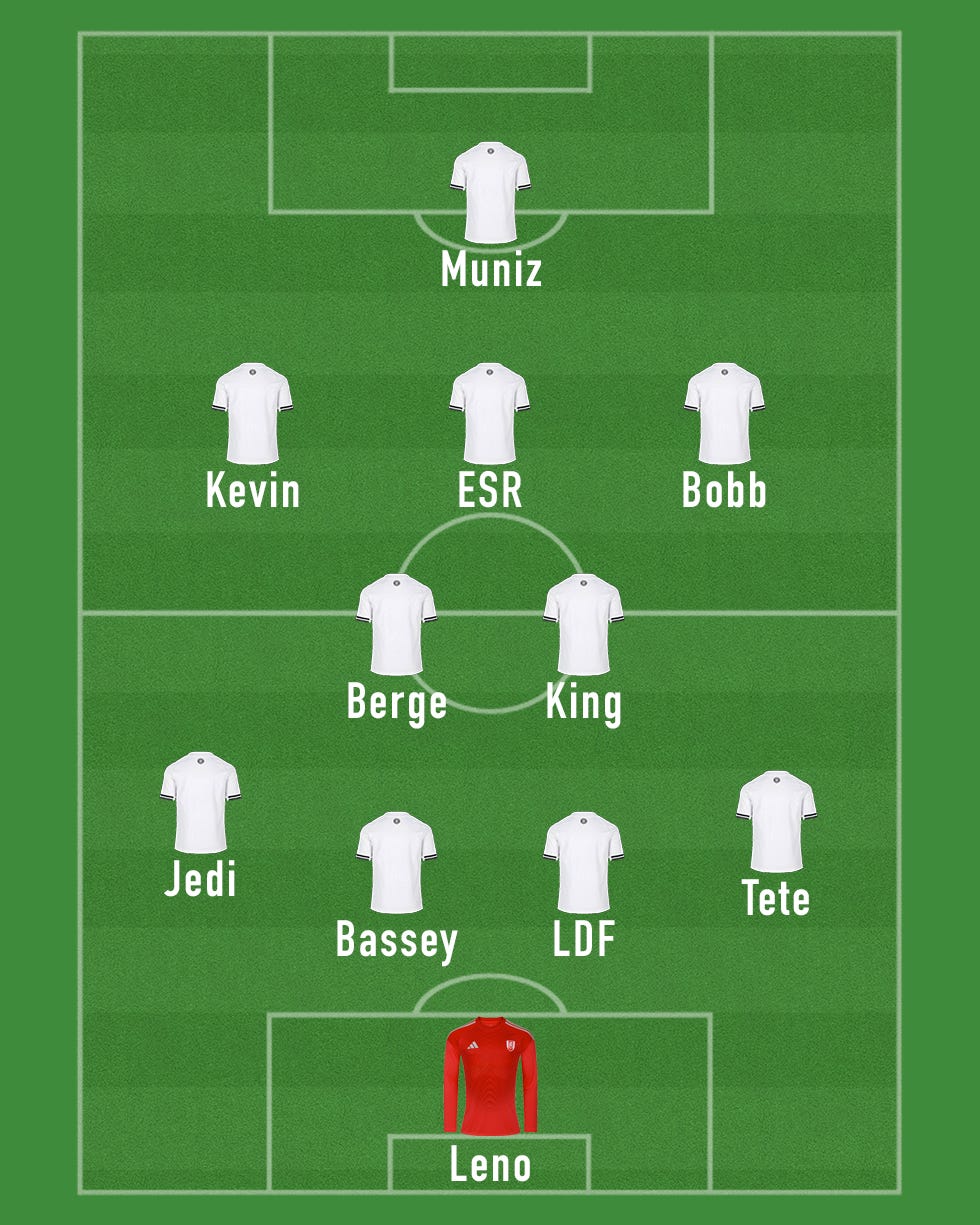
Summary
I believe that on balance Kieran McKenna is the strongest overall fit for Fulham because the squad should be increasingly built around young, technical attackers who benefit more from structured development than rigid tactical constraints.
His work at Ipswich shows a clear pattern of improving similar profiles - notably developing a young Omari Hutchinson into a more complete inside forward through gradual increases in responsibility. That progression aligns closely with what we want/expect from the likes of Oscar Bobb, Josh King, Kevin and even Emile Smith Rowe, all of whom would suit his step-by-step coaching approach.
Poch’s involvement in the World Cup makes it a troubling appointment in terms of timing, despite it being a good tactical fit. While Glasner could offer a quicker short-term impact and Slot a higher technical ceiling, both require either greater physical adaptation or a more uniformly elite squad. Amorim is the most system-dependent and would need significant restructuring, while both Thomas Frank and Frank Lampard are less consistent tactically and would also face a challenging (to say the least) reception given their associations with rival clubs.
Our last manager was labelled a genius and in my view McKenna stands out as the most likely current candidate to continue that mantra because he enhances the squad’s existing strengths rather than reshaping it, making him the most balanced option for both immediate stability and long-term growth.

You highlighted McKenna's weakness is defence, and that is an area we are already quite poor in. For me, his appointment would be a massive risk and a guaranateed relegation scrap as we lose a bundle of games 3-2 - classic 'plucky' but frail Fulham. I'm not as bothered about individual player development, as I am about team solidity, especially as any rising stars will quickly get poached anyway. McKenna is not the answer.
Ipswich would cost 8 million. Glasner may go to acmilan but have to persuade him that Italy doesn’t produce World Cup players, stay in England…or have to persuade Thomas Frank to start now…wouldn’t choose anyone else…slot said no but has fallouts with people.amorin didn’t get the best out of Marcus another fall out..lamps is not a prem..Ange didn’t work well at Forest and put spurs near to relegation.