


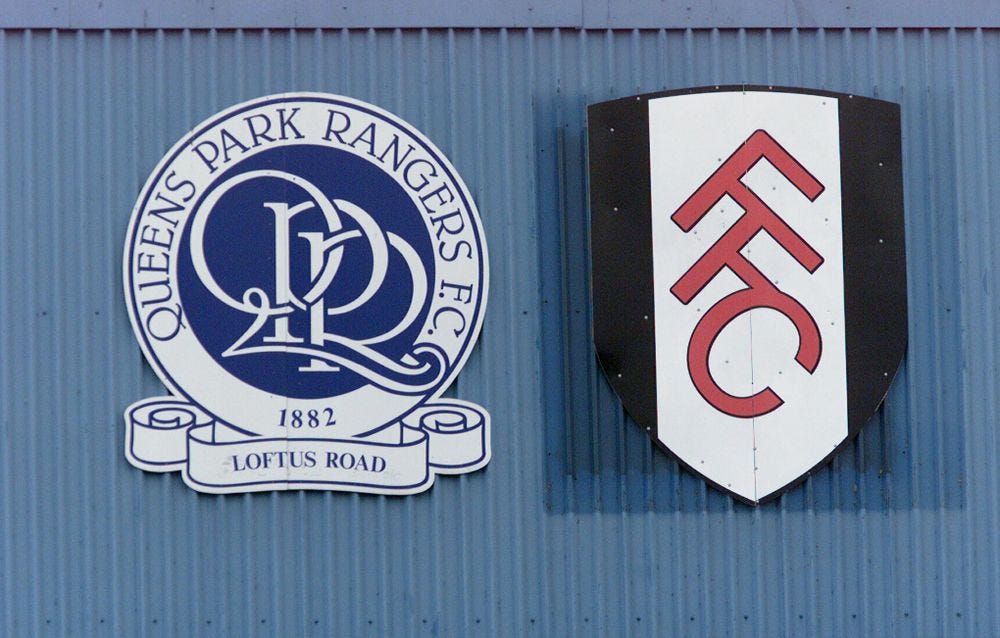
Craven Cottage and Fulham FC have remained synonymous since the club bought the land on which the ground is built in 1894. But 2027 will see the 25th anniversary of a two-season period when we were forced to leave our beloved home and become lodgers at a club with which we had a chequered history.
Our spell at Loftus Road, home of Queens Park Rangers, saw us move a mere matter of a few miles. Yet the separation of Fulham from its historic ground upset many.
That said, on-field matters could have been worse: the first season in exile, 2002-03, saw us win the Intertoto Cup under Jean Tigana, his last successful act as manager before being replaced by former captain Chris Coleman. ‘Cookie’ took us to ninth place, then Fulham’s highest ever league placing, in his first full season and could have done better had star striker Louis Saha not been sold to Manchester United against his wishes in January 2004.
So why did Fulham leave? Although plans to redevelop the Cottage had led to local opposition, this was overruled by the government. Now-disgraced chairman Mohamed Al Fayed couldn’t make a business plan work on a 25,000-capacity Cottage, given the potential cost of the proposed development, so the club turned their attention to a new site in White City. This would allow the prime Thames-side site to be sold off, releasing much-needed capital. But the land belonged to two companies, one of whom refused to sell.
Fulham were victims of their own success. We had arrived in the Premier League in 2001 but had standing terraces behind both goals: in the post-Hillsborough world, this was not acceptable as a top-flight football club. After one season’s grace, we had no choice but to move.
QPR had recently been relegated and needed a tenant for financial reasons. As mentioned, Fulham stayed at Loftus Road for two campaigns until, in September 2003, plans for a return were announced. Pressure had been exerted by a supporters group formed that very year called Back To The Cottage, and one happy result of this victory was its transformation into the Fulham Supporters Trust. Regular dialogue between the club and the FST began in 2014 and continues today.
During the second season in exile, the Cottage saw work done to make it fit for top-flight football. Temporary seated stands were installed at the Hammersmith and Putney ends – they still exist today – while the standing enclosure which ran the length of the Stevenage Road (now Johnny Haynes) stand was also given seats. The result of this ‘make do and mend’ approach, club historian Dennis Turner said, was still “an anachronism, a ramshackle Edwardian edifice, but to Fulham supporters it was home.”
Fulham’s temporary exile was not as seismic as the events of early 1987, when a combined ‘Fulham Park Rangers’ club was mooted and Fulham FC as we know it faced an existential crisis. Yet separation from the Cottage and all it represents was an unhappy situation for fans to be in. We never had ‘flats on the Cottage’, but some cynics would say it was not for want of trying. Al Fayed realised taking us home ‘to the place we belong’ would earn him thousands of friends, and so it proved.
Since then, of course, the 20,000 capacity of the ground has been increased by the multi-purpose Riverside Stand, which will hopefully help Fulham FC compete financially in years to come. It also means that, despite the Khans’ failed 2018 bid to buy Wembley that preceded that development, our foundations remain firmly in SW6. Long may we ‘Live by the River’...
QPR were in financial difficulties but had an existing tenant, Wasps. We paid them handsomely to vacate. QPR were so broke that they / Wasps played their final few games with no hot water in the dressing rooms. Fulham picked up the bill for that upgrade as well as floodlights and other issues.