


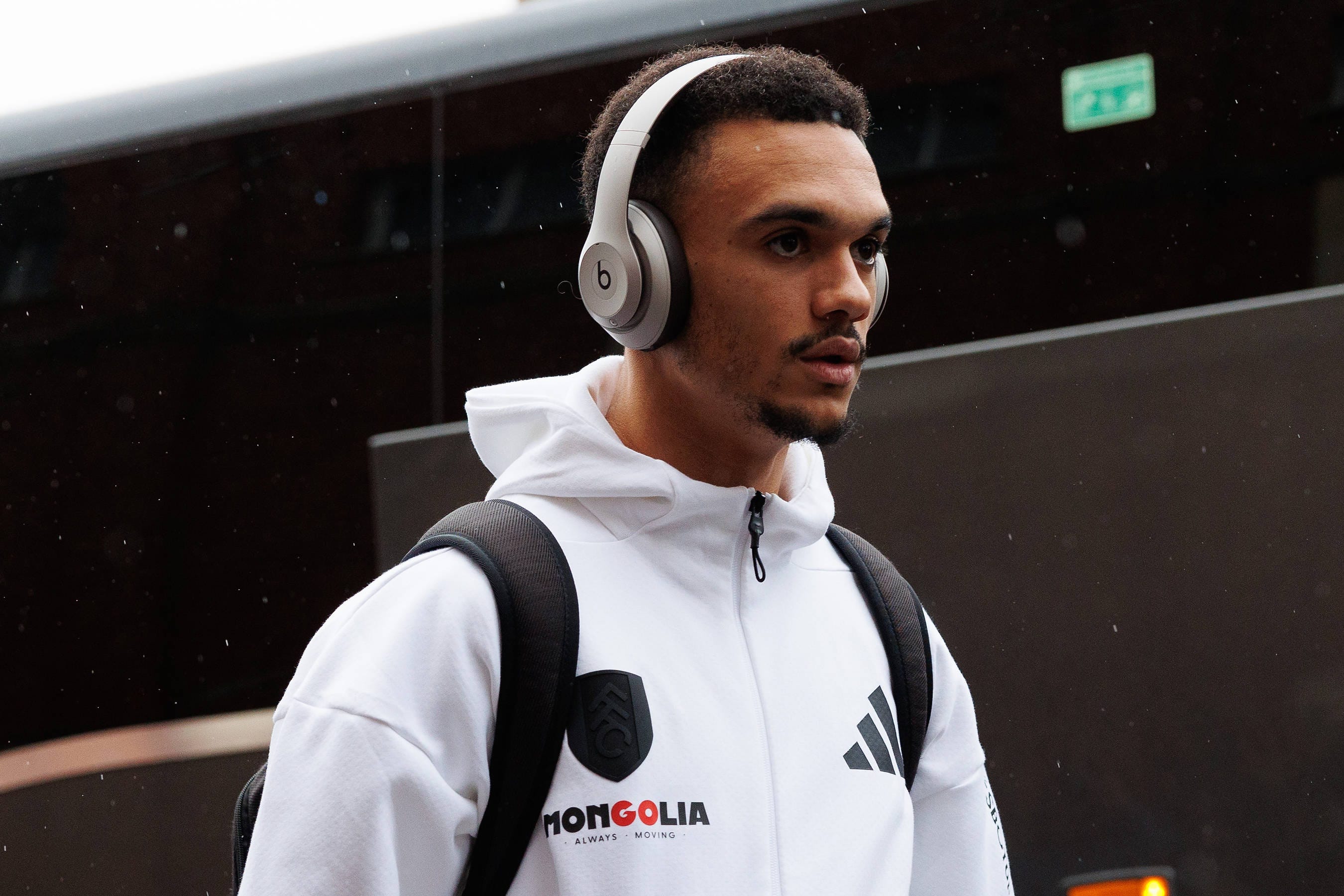
It was the second goal that really killed it.
Belgium forward Charles De Ketelaere ran forward, rose up and forced his way between Tim Ream and Antonee Robinson and headed a perfectly delivered corner from Leandro Trossard into the net while throwing Ream to the ground like he was a toddler.
De Kelelaere is a fine player - who scored a similar goal in the quarterfinal against France - but in that second goal against the US he looked like he was the Dwayne ‘The Rock’ Johnson instead of a 1.93m, 74kg second-string national team forward who plays in Serie A.
And, Trossard - normally a third choice option for Arsenal in trying to score on delivered balls from corners - became Declan Rice. Meanwhile, formerly reliable Premier League defenders Ream and Jedi suddenly turned into - bad - youth footballers.
After that second goal and the two more that followed, the problematic dream of soccer in America was set on fire, like the piles of books, paintings, playing cards, dresses and other “vanities” set on a bonfire by Savonarola and his fantatical supporters in Florence’s Piazza della Signoria in 1497.
The American soccer dream
If you live in the US and root for, read about, and watch a lot of US national men’s team soccer, you invariably hear players, coaches and pundits talking about how when the team takes the next step that “American soccer will be on the map.” It’s the dream.
And, this year, with this "World Cup, was supposed to be the year that it happened and the dream was realized.
American soccer/football fans are an interesting group. We are - mostly - non-traditional sports fans in the US. Rooting for the US Men’s national team which we, in the US, call the USMNT and Premier League teams like Fulham, as an American fan, is like being a fan of an alt rock band or pour-over coffee. Yes, things like Ted Lasso and being able to see Premier League games on national TV in the US changed things but they have not yet - “put American soccer on the map.”
I often try to explain my USMNT and Fulham fandom to friends and family and they - with a few exceptions - look at me as if I was talking about collecting obscure historical artifacts. Whereas, I can always talk about my American Football fandom (I am a Chicago Bears fan) to any relative or any friend at any moment and immediately be fully connected.
I, for one, became a USMNT, Fulham and football fan because I was at the time fed up with American football (that has since changed because the Chicago Bears are now awesome). Also, my kid - like a lot of American soccer/football fans - played on a team and had become obsessed with the sport. So, I decided I wanted in.
I first started following the USMNT and then, because of players like Ream and Jedi and the FulAmerica movement, I found my way - for better and worse- to real Fulham fandom.
I joined fan groups around the US soccer team like you do with any obscure hobby so you can stop driving your partner crazy by trying to talk to them about it. I got involved in discussions and I learned about football and being a fan in the US and in the Premier League.
In the US fan groups, at the time, there was a divide between the USMNT fans who were “pro Europe” and those who were “pro-US.” What this referred to was whether or not it was a good idea for US players to go to Europe as opposed to staying in the US and playing for Major League Soccer (MLS).
Now, this debate seems absurd. Of course it is better for Tyler Adams to play for Bournemouth than for the Chicago Fire because the Premier League is the best league in the world. But the argument was a real thing. The pro-US fans would call the pro-Europe US fans “elitists.”
We - the pro Europe side - made counter arguments with data. I did things like cite global rankings of pro football leagues like this table that shows that US’s MLS is ranked 18th, just below the Paraguay and Polish leagues. This did not go over well. The argument was resolved in favor of the “pro-Europe” side but only recently.
The weird thing is that for US fans is that we like the fact that soccer is - despite being the largest professional sport in the world - alternative in our country. But, yet we yearn for our friends and family to share our passion and to stop looking at us funny. So, many of us constantly talk about what it will take for everyone to join us and see how great football/soccer really is and to “put soccer on the map.”
And, the solution that gets talked about the most is the USMNT and the World Cup. If the US could win or do well and capture the hearts and minds of America, everyone will like soccer and we will be happy.
This is a trap, of course. As all who have ever loved and cheered on an obscure band towards success knows, it sucks to be an OG fan among a sea of bandwagon followers. They, of course, don’t really “get” the band.
The World Cup
This World Cup was supposed to be different. Our team was and is, despite the result with Belgium, good. We had many players at top teams in Europe. Our draw was do-able. We were hosts. We did well in the knockout round.
And, “big soccer” (a true oxymoron) was all over it in the US. The highly problematic star of the US team - Christian Pulisic - was on TV constantly, even alongside Messi, endorsing brands like Michelob Ultra. “Supporting cast” team members like Tyler Adams were spokespeople for products like Sensodyne. Fox - which broadcast the World Cup in the US - promoted the heck out of it. The hosts on Fox - including a mediocre, bellicose former player named Alexi Lalas - went on and on about how this was the big opportunity for US Soccer to get on the map if the team “wanted it enough”.
Big soccer also got our controversial President involved. He palled around with the head of Fifa who rented an apartment in Trump Tower and gave him a peace prize. The biggest donor to US Soccer met with the President. And, then the President even went into action mode when our star striker got a red card and was suddenly unavailable for the next knockout game to try and change things. Our President cared about soccer! Maybe if the US team could win the next game and beat Belgium, soccer would finally be on the map!
The red card
On my social feeds, after Balogun got the red card, I was offered T-shirts with the slogan “Free Balo.”
I read debates on the Fulhamish Telegram group which, went like this.
US Fan: “that red card was an outrage!”
Non US fan: “you are on drugs.”
But it was fun and harmless until Trump, apparently at the moronic urging of governing bodyUS Soccer, succeeded and got the game ban reversed (he is very good at corruption after all). My fellow soccer fans in the US messaged me right after the decision “Balo can play!” “Hooray” we - the US fans thought. Then the backlash started.
Suddenly, we were on the map, for the wrong reasons. The world hated us and our team.
A note about Americans from an American
When I first visited Europe in the mid 1980s, I was shocked. Some of my fellow travelers didn’t like me because of Reagan who was then President. I tried to explain that I didn’t like Reagan either - I actually worked on the Mondale campaign. But, they didn’t care. We Americans - even the ones who like “soccer” and didn’t vote for the President that everyone hates - are still Americans and, so, the subject of ire from many.
Some of my fellow travelers actually pretended they were from Canada and sewed Maple Leafs on their backpacks. I went the other way and “defended my country” in arguments with drunk Australians in Earl’s Court. None of it was good, but it was illustrative about a key thing about Americans.
The thing about Americans is that we often don’t understand 1) the outsized impact our country’s culture, business, politics have on everyone else and 2) how much this impact - understandably - pisses a lot of people off.
This is because many Americans - even the ones who like soccer - don’t spend a lot of time reading about places outside of America. I am generalizing but it is true. The big divide in US politics right now is not between the left and right but between the people who read about politics, issues and everyone else who does not - and it’s not close, most are in the second camp. Yes, US soccer fans do tend to be in the smaller “give a crap” bucket but even we are - dare I say - a little naive about how the US is perceived abroad.
It was probably not a good idea at a time when our country is literally trying to take over territory that belongs to Europe (Greenland), sending our army into other countries, setting tariffs on any goods worldwide to our advantage and having billionaires intervene in politics around the globe, to try and get a special break in the one sport and area where the US is not dominant. People around the world were pretty unhappy that we actually “freed Balo.”
But, because we Americans - mostly - don’t understand how we are perceived - the reaction to the Balogun suspension and the fact that everyone now hated our team was shocking, especially for US soccer fans hoping that we would “finally be on the map”.
Killing the USMNT dream
The Belgium team - as illustrated by Charles De Ketelaere’s superhuman goal - were pretty motivated to beat the US after the red card reversal. Our President - and US Soccer - managed to unite Belgium’s famously divided team. “Of course, that motivated the group,” (said) Nicolas Raskin, who set up the early opening goal…. “It was an injustice that made for a special build-up. That makes winning this match extra special.” They even famously did the Trump dance post match.
In the US, fans are still debating whether or not our team - for negative reasons - became the biggest story at the World Cup and the fact that the world hated the US team might have had an impact on our players.
It is of course - like the “pro-Europe” and “pro-US” debate - ridiculous. Our best players are from or live or have lived in Europe. Their social feeds were inundated with messages about the red card as the following message on one of the main USMNT discussion groups illustrates. Tim Ream is not - even at 38 - that bad especially when he does not have to run.
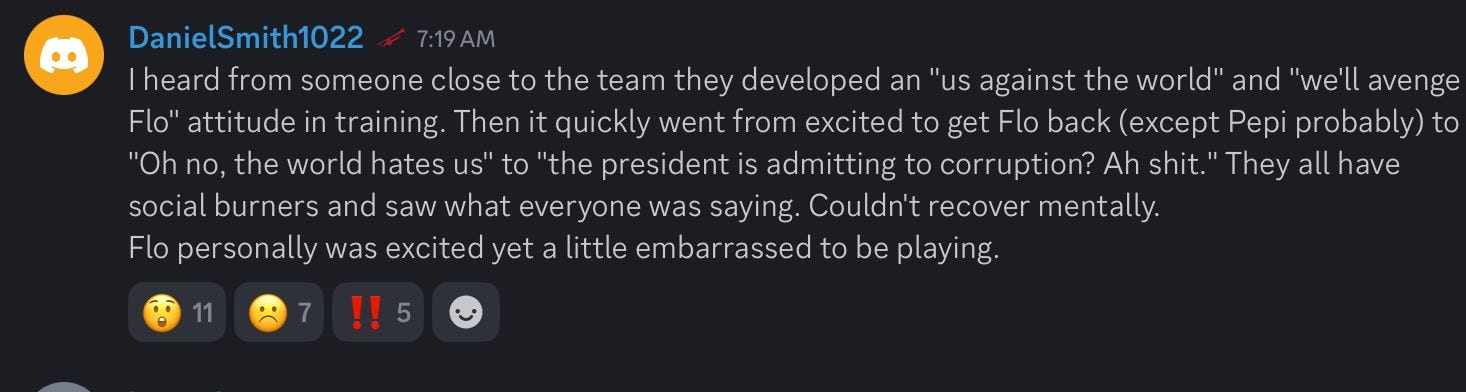
But, the debate goes on and is telling about US fans. We don’t want to believe that the world hates us and we really, really want the world to know that we, and our team, are different. We like soccer after all!
Where do we go from here?
I for one think there is a silver lining to all of this. “Big soccer” in the US blew its big opportunity to put “soccer on the map”. But, this - in my opinion - can be a good thing. I like that soccer is not like American football in the US. And, I don’t want it conflated with American exceptionalism. I just want to enjoy football.
I think the USMNT is good, but not elite, and plan to enjoy the heck out of rooting for them at CONCACAF qualifying. I am sorry for Christian Pulisic that he is going to lose some of that sweet sponsorship money and that Tyler Adams might no longer get free Sensodyne, but am not unhappy that things will go back to normal.
Hopefully, talented players like Flo Balogun with options to play elsewhere will still want to play for the US even though the dream is dead.
I, for one, don’t care if soccer “gets on the map” - I just want to enjoy good football hopefully at future World Cups and at Craven Cottage.
Oh, and after all this, I have decided I am no longer a “FulAmerica” fan, I am just a Fulham fan.
I am still a Jedi stan though.
Thanks Matt, a very heartfelt and honest take on what ended up being a very complicated ending for the USMNT. I lived and coached my kids and other kids in the US for 30 years before heading back to Europe and I have a real sense of the shared desire for soccer to take its place in the pantheon of major sports for US fans of the game. The numbers for the last game audience wise are worth celebrating, 55 million tuned in to the Belgium game, the highest sports audience outside of Superbowl and NFL playoffs. The earlier USMNT games pulled in more eyeballs than the Stanley Cup Final, so arguably soccer has achieved its goal of being the 4th Major Sport, even if it is a way behind the big three.
It is well known that "Everything Trump touches dies" and it was a real sadness to see all that goodwill be pissed away by the ridiculous appeal to the feckless FIFA for Balo's red, I accept your point that it was probably more US Soccer and the Mango Mussolini taking all the credit. But viewed from outside the US you went from everyone's favorite underdog to get by a tired and aging Belgium, with all the good wishes and good will from everyone except the Belgians, to the "cheating" team we wanted the Red Devils to torch, a reminder of how thoroughly corrupt FIFA is, how US Soccer continues to be an impediment rather than a catalyst for the sport of soccer's growth and success.
I would love to see the sport develop more in the US but with the current system I have little expectation. I think the dependence on the touring club to college development route and MLS Superdraft process, the Major League franchise approach will exclude poor kids and especially put off the millions of young Americans who come from a Latin American background and are born loving the game. For the lucky kids who do make it through and ply their trade in Europe, it is the best path to testing themselves and reaching levels of reward that are not currently available in the MLS, like you I side with the Pro-Europe path and am happy to see players like Ream, Richards and Adams playing in Europe and thriving.
Fulham will hopefully have enough ups and downs to keep us engaged and the excitement for the new coach and his highly talented staff is paplable, who knows maybe he will actually appear on camera soon!
Matt, I truly appreciate and can identify with everything you said about being an American and following European soccer and loving Fulham because of the American connection that introduced me to the club in the early 2000's. I know you're journey... I've lived it too. I understand why you would bring politics into this article because of the recent involvement of our current President, but I would encourage you to separate sport and politics in your articles as much as possible. Following sport is a way to get away from the political rhetoric and to unite us fans from so many backgrounds with our fandom. Having read this article we have vastly differing opinions on politics, which is fine, we can still be brothers in our love of all things Fulham FC. My basic comment to you would to not be so bold to brush others of a different political view as uninformed and uneducated as the root cause of our differing social and political views. There are many well informed Americans, such as myself from South Mississippi, with broad international interest and understanding of the current geopolitical and social landscape who fundamentally simply have a Christian faith based view of the world and world events, and the role our nation has to play in that, and that view differs but not because of ignorance. So be a little more open minded in your belief that ignorance is the root cause of political difference (I do totally agree there are plenty of socially and politically ignorant people in America and around the world!) but there are plenty of us like you and me who are thoughtful deliberators of our world and our country and what's best for the preservation of our American values here and around the world. Soccer in America is something that should bring us closer to our European and International friends and to be able to have a fierce debate about the performance (or lack there of) of our men's national team is what is making soccer not "big" but important and a part of the American "culture" and I think that is awesome! Keep writing and stand firm with your beliefs, and remember we all have more in common than differences. I'm excited to see what the new coaching staff does with new transfers (I hope there are many to come in the next few weeks) at the Cottage this year. COYW