



I’ve been looking at Fulham’s most recent set of financial reports and found out some very concerning numbers related to Fulham’s ticket sales. You can also look at the reports - just go here to start. This is the first in a series of (shorter) articles I’m going to write about what I’ve found in the financial reports.
Fulham files reports on its finances for the previous financial year to the UK Government in the spring. Last month, it released data about financial results for last year (2025). The club offers comparisons to results for 2024 in these statements.
The ownership structure for the club is somewhat complicated in terms of financial reporting (more to come on this) - i.e., there are several different financial entities. For this piece, I’m relying on the 2025 report for “Fulham Football Club Limited”, which is the entity that runs the club (essentially).
The club reports on several key metrics for the year in the report because “the directors consider these (indicators) to be the most useful measure of performance as they link the on-field performance of the team to financial results achieved by the company.”
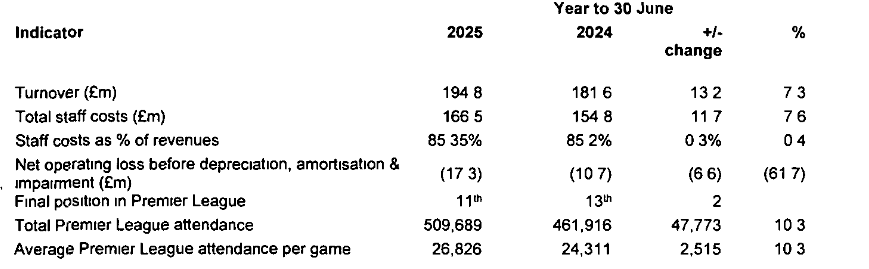
One of these key metrics is total attendance and, as you can see, the report notes that from 2024 to 2025, the team increased its attendance by 2,515 people per game. Presumably, some of this increase is due to the Riverside Stand opening up fully in 2024/25.
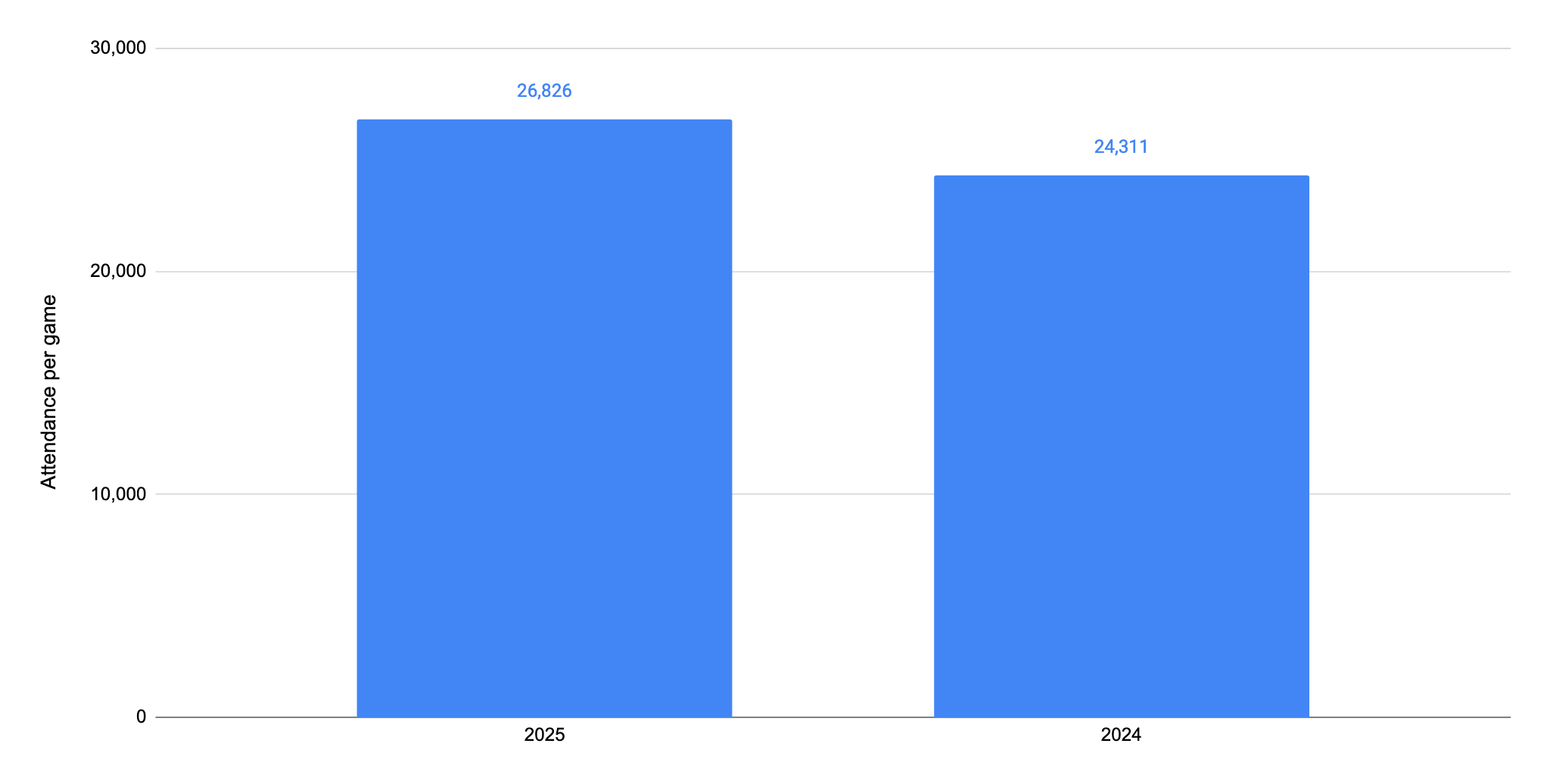
Someone who’s friends with Alistair Mackintosh might say “Good job, attendance is up!” However, further in the report, the club states the following:
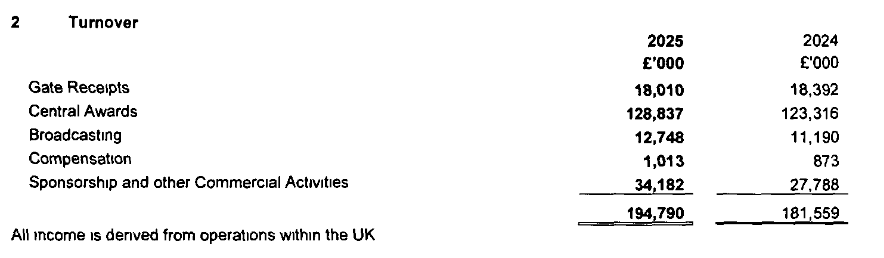
As you can see from above, the club’s revenue from “gate receipts” went down from £18.39m in 2024 to £18.01m in 2025. Gate receipts include revenue from season ticket sales (according to the report) and, I am assuming, matchday ticket sales.
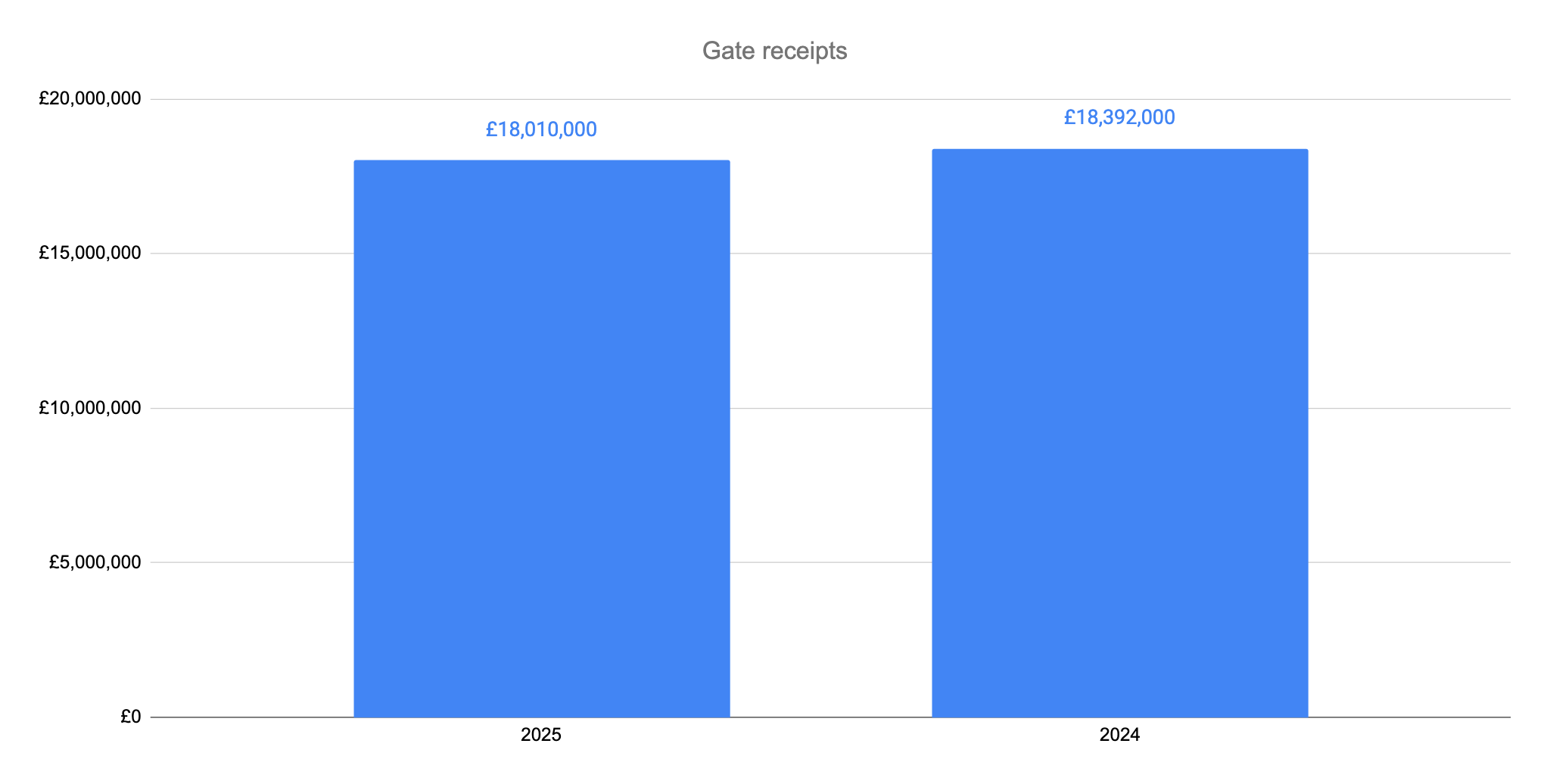
And, this happened despite total attendance increasing from 461,916 to 509,689 from 2024 to 2025.
Now, while I do have an MBA (and am a former business journalist), I am not an accountant and could be missing something. But, it looks like the club reported somehow making less money in 2025 from ticket sales while increasing attendance. They made less while charging more to get into the Cottage (and having more seats to sell).
I don’t know about you, but the one argument I at least understand about higher ticket prices (I don’t agree with it but I do understand it) is that because of looming SCR rules, the club needs to do everything it can to generate more revenue including higher ticket prices so it can bring in the players we need to compete, continue to stay up and, hopefully, get better and get to Europe.
I personally don’t think the amount of revenue generated by higher ticket prices is worth the trade-off of losing longtime fans, the impact on the atmosphere at the games (by having so many one-off tourists attending games instead of real fans) and the negative impact on the community, but I get it.
I don’t get raising ticket prices and losing money. This is a lose-lose situation. If true, it means the club has been alienating fans for no reason and actually making itself less financially secure as a result.
To be clear, the report does not state why gate receipts decreased in 2025. One clue as to what might be happening is found in the “deferred income” section of the report

As you can see, deferred income from “season ticket sales in advance” decreased from £9.19m in 2024 to £8.96m in 2025. Of course, the team could simply be changing how and what it accounts for deferred income, but it does seem strange that the team is reporting making less money from selling advance season tickets despite having more inventory and more expensive season ticket packages (e.g. more than £3,000 for a season ticket in the Riverside). So, possibly, higher prices - or other factors - could be negatively impacting season ticket sales and total sales.
Looking back a bit, you can see that this could be the start of a trend. Advance season ticket sales have been declining since the club increased its prices by 18% for the 2023/24 season and while they overcame this loss for that season, with overall gate receipts, potentially, the continued negative impact of higher ticket prices meant that the club lost money as of the 2024/25 season (when the club raised prices by another 4%).
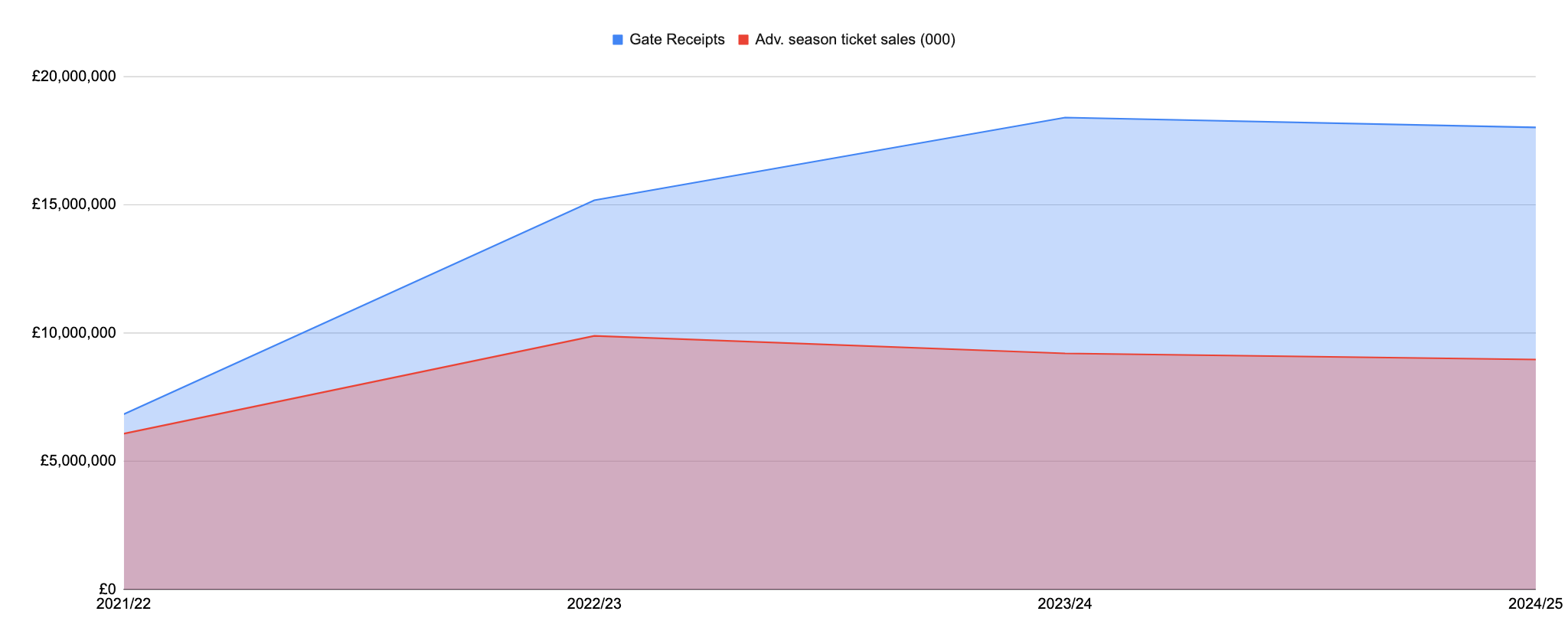
It’s kind of incredible when you put all the data for the different seasons, side by side.
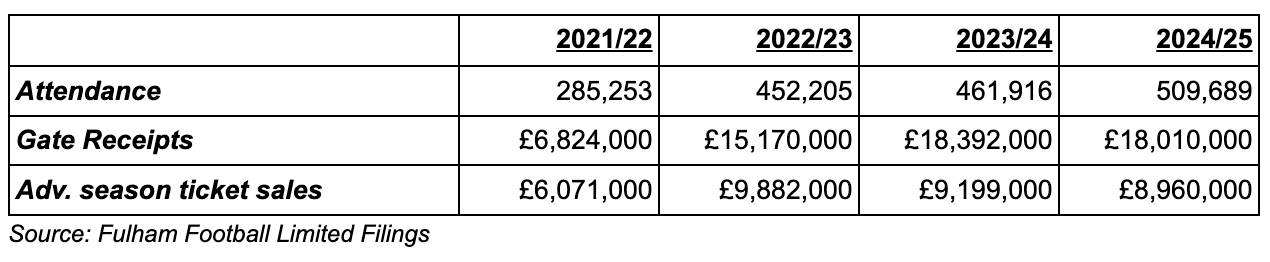
Attendance has gone up but the club is making less money. It looks like Fulham made a mistake by increasing ticket prices so dramatically and ended up alienating its existing fanbase while not finding a new one. And, then after that happened they have not really tried to repair the damage done with long-time fans. Perhaps, the club fixed things for the 2025/26 season, somehow? We will see.
Regardless, the club should explain what happened and have an honest dialogue with the fanbase about the effect of higher prices on revenue and the club.
Fulham’s pricing strategy may be backfiring not only for the fans (i.e., those who can no longer afford to attend games) but also for the club’s financial performance, which would be really unfortunate and stupid.
If anyone else, who is an accountant (or affiliated with the club) can explain what is happening and how the new ticket strategy is working (or not working) to help make the club stronger and more sustainable financially, please do so in the comments.
C’mon Fulham (we can do better than this)!
Possible that the increased attendance and lower receipts is explained by the undisclosed number of free tickets given away to ensure the ground looks full? Would need to understand the timings around year end and season ticket purchasing windows to unpick the deferred income.
A very good read and I look forward to the upcoming articles on the finances of the club. From a personal point of view I can only say that I am one of the long time fans(50 years) that does not attend many games anymore due to the high ticket prices. When I go my son comes with me so as a future supporter he is also seeing less of the team he loves.