


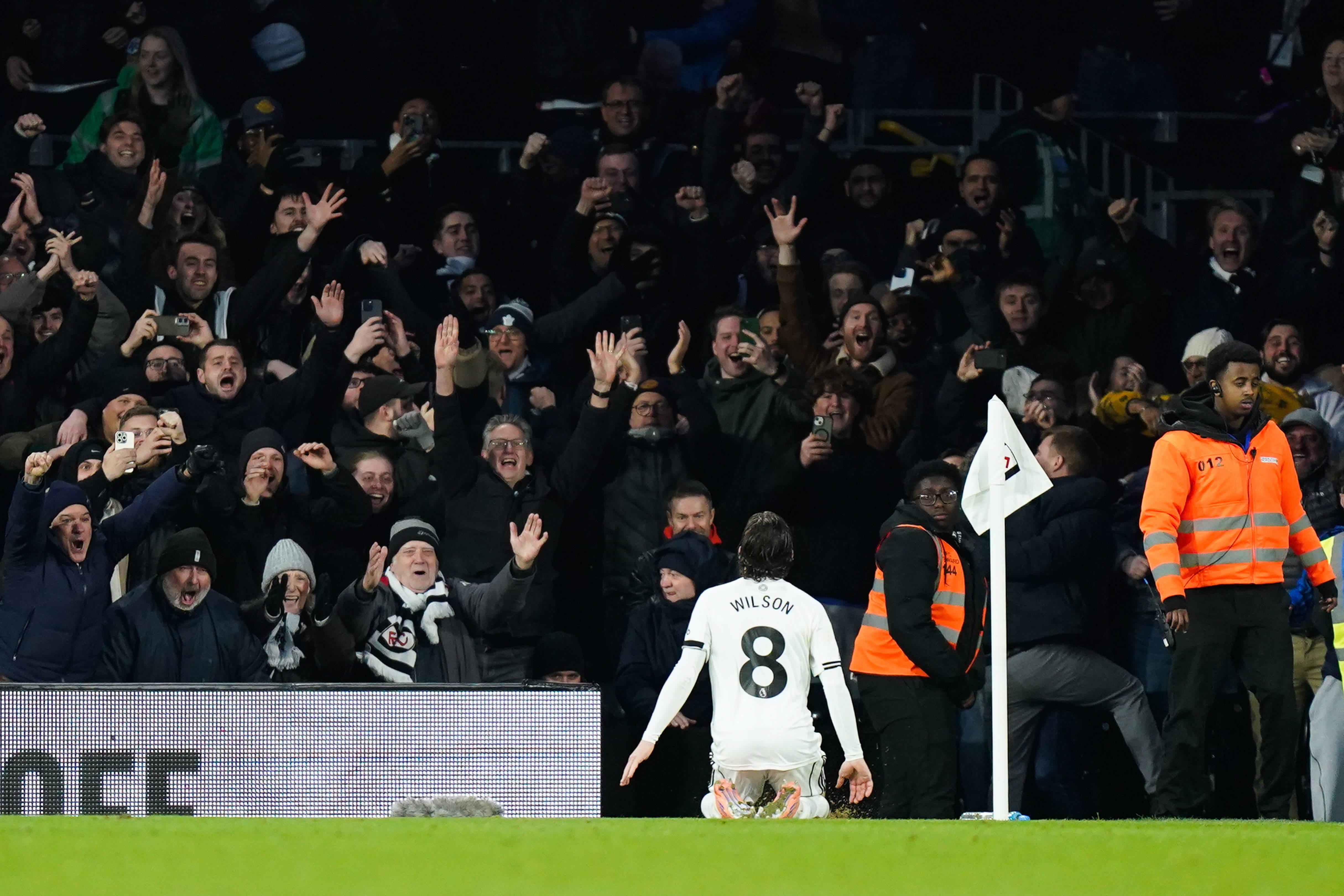
At the 2024 Hudl Statsbomb conference in Manchester, a data scientist named Lorenzo Cascioli presented his findings in a panel called “Boot it: A pragmatic alternative to build up play.”

In his study, Cascioli compared how often professional football teams, in the next 10 actions, score in a football game after kicking a ball out of bounds and giving a throw in to the other side (that they can press to try and win back possession) compared to when a squad makes a backwards pass in an attempt to build up possession from the back.
What Cascioli explored was to see if the idea of booting it long pays off, if the player doing the kicking can boot it out of bounds near the other team’s penalty area.
Cascioli came up with this premise when he saw Slovakia at the Euros kick the ball out and then successfully force Jeremy Doku to turn over the ball in Belgium’s penalty area, which led to an easy goal for Slovakia.
He also saw his native Italy fall victim to the same situation against Romania (after Romania kicked the ball out at the start of the match and successfully pressed and scored the fastest goal in the history of the Euros).
As the chart below shows, according to Cascioli’s study, teams that try to build up from a backwards pass have a 0.2% likelihood of scoring in the next next 10 actions, while teams that boot out score 0.34% of the time in the next 10 actions.
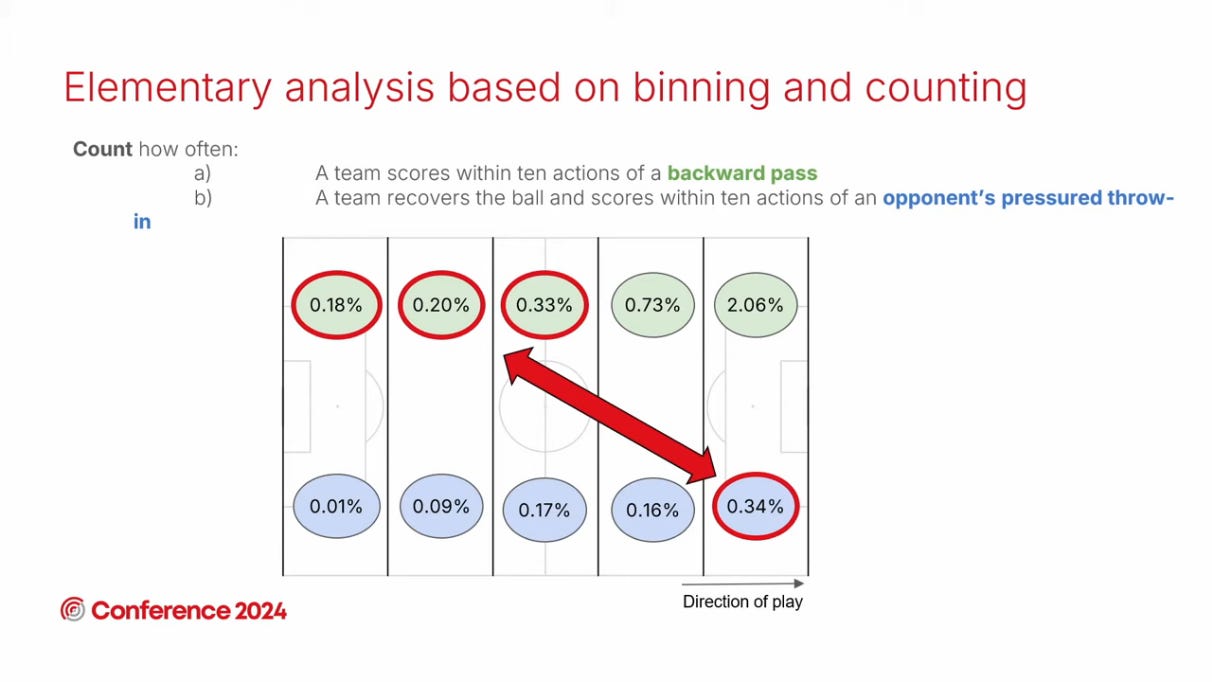
So, according to this analysis, teams get into better scoring opportunities more often when they kick the ball out in high value areas and press and win it back than when they try to keep possession and pass the ball into those areas against a settled defense.
It makes sense. Building the ball up via possession from the back, moving the ball into areas heavily defended and scoring is a very hard thing to do. And as we know from watching Fulham’s central defenders trying to pass through pressure, pressing teams at the back can pay off because the defense is unsettled and there are real opportunities to score when you can win the ball in the other team’s penalty area.
Last season, many Premier League teams took notice of Cascioli’s findings and started booting the ball out of bounds with some success. As Opta analyst noted:
Already in 2025-26, three kick-offs have been booted straight out of play in the final third of the pitch for an opposition throw-in. That’s three times as many occasions as in the last five seasons combined. In other words, it’s happened three times in 30 Premier League games this season, after happening just once in the previous 1,900.
Cascioli’s approach is also being used, notably, by teams in the current World Cup. One Premier League team that didn’t boot it long last season - as we all know - was Fulham. Because our manager, Marco Silva, strongly believed in building from the back, because Fulham was last in the league in terms of sequences pressed (per game) and because Bernd Leno is terrible with his feet and not really able to reliably kick the ball where he wants (although this one time he did kick it right where Cascioli recommends).
Silva in many ways was an anachronistic manager. While he was pragmatic (and changed how we played after Fulham’s promotion) he generally wanted to play beautiful football and not the odds. This was, in my view, sometimes problematic given our team’s constant struggle to score after getting in the final third.
Interestingly, the one area where Silva did play the odds in the final third - and against formerly conventional wisdom - was with long range shooting last season.
He had Harry Wilson shoot more frequently from long range even though these new shots had - relatively speaking - a lower xG - or likelihood of scoring - than balls shot closer to the goal.
Silva was, in this case, implementing recommendations from statistical analysis that originated with a 2021 paper entitled “Leaving Goals on the Pitch: Evaluating Decision Making in Soccer.” The paper, by Roy, Robberechts, Yang, De Raedt, and Davis found that:
Analysis of the popular expected goals (xG) metric in soccer has determined that a (slightly) smaller number of high-quality attempts will likely yield more goals than a slew of low-quality ones. This observation has driven a change in shooting behavior. Teams are passing up on shots from outside the penalty box, in the hopes of generating a better shot closer to goal later on. Our key conclusion is that teams are overcompensating: all teams would score more goals if they shot more often from outside the penalty box in a small number of team-specific locations.
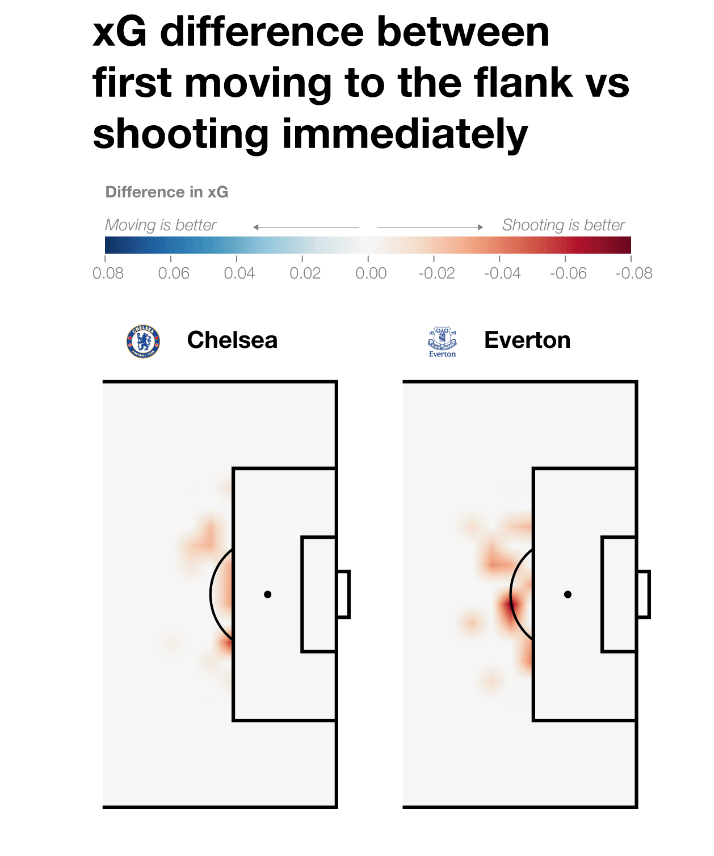
The paper illustrated what they meant in a team-by-team analysis (as the graphic comparing shots by Chelsea and Everton shows below). The redder spots are where teams can have the most success with shooting from distance rather than trying to dribble, pass to closer, higher xG spots for shooting.
Silva changed how Fulham (and Wilson) played in response to this finding.
It was better to have the Welsh wizard take a low xG shot with his magic left foot from the top of the box, when that was open, rather than to try and get to a closer spot (and to be able to get a higher xG opportunity).
As the Athletic pointed out in the heat map below, Harry’s shooting this season changed compared to earlier seasons. He suddenly stopped trying to get closer to the goal and started taking a lot more low xg shots on the edge of the box.
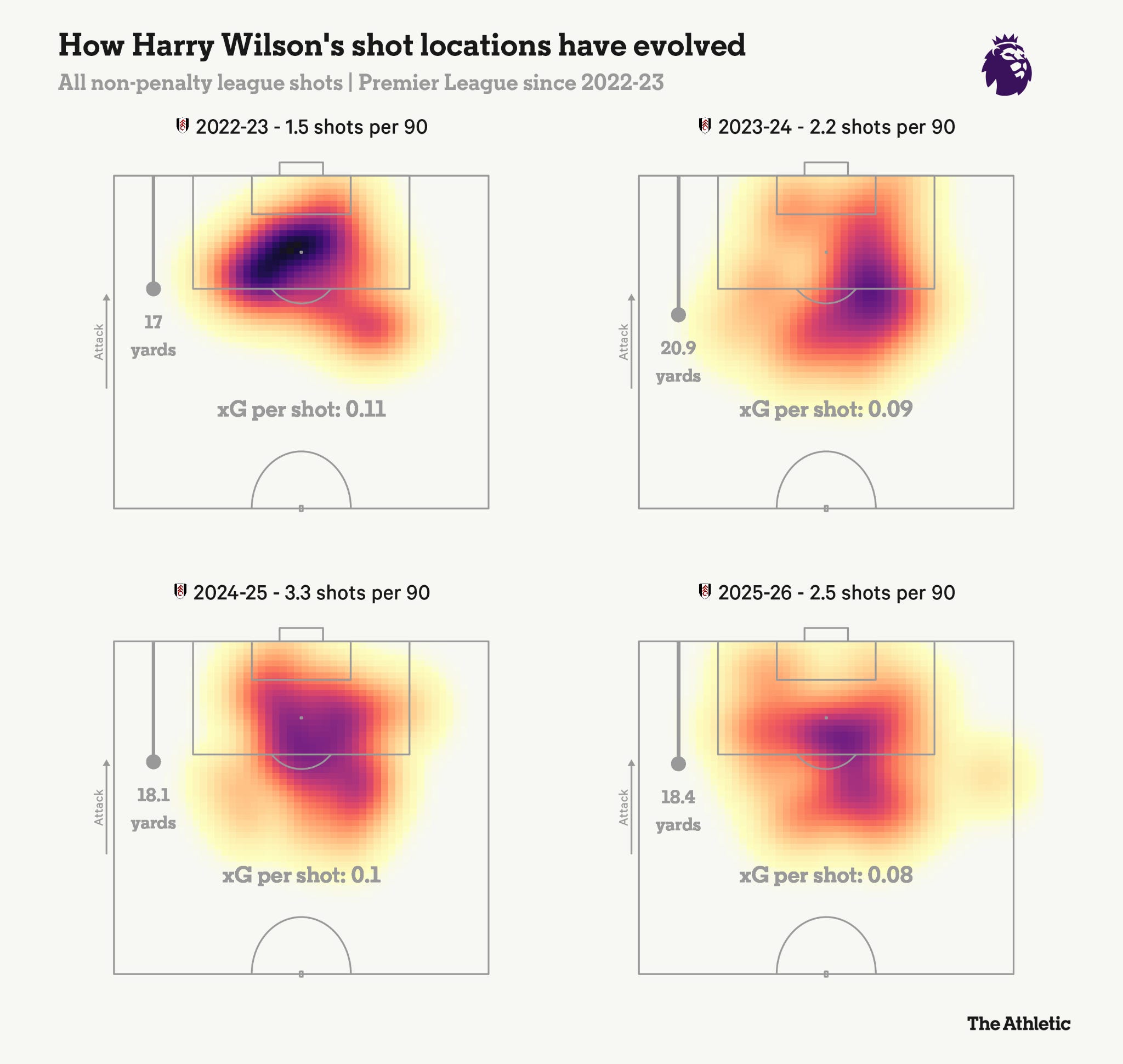
And, the strategy worked. Harry got a lot of (low xG) goals (and as a result exceeded expected xG with actual goals) as did a few other Fulham players.
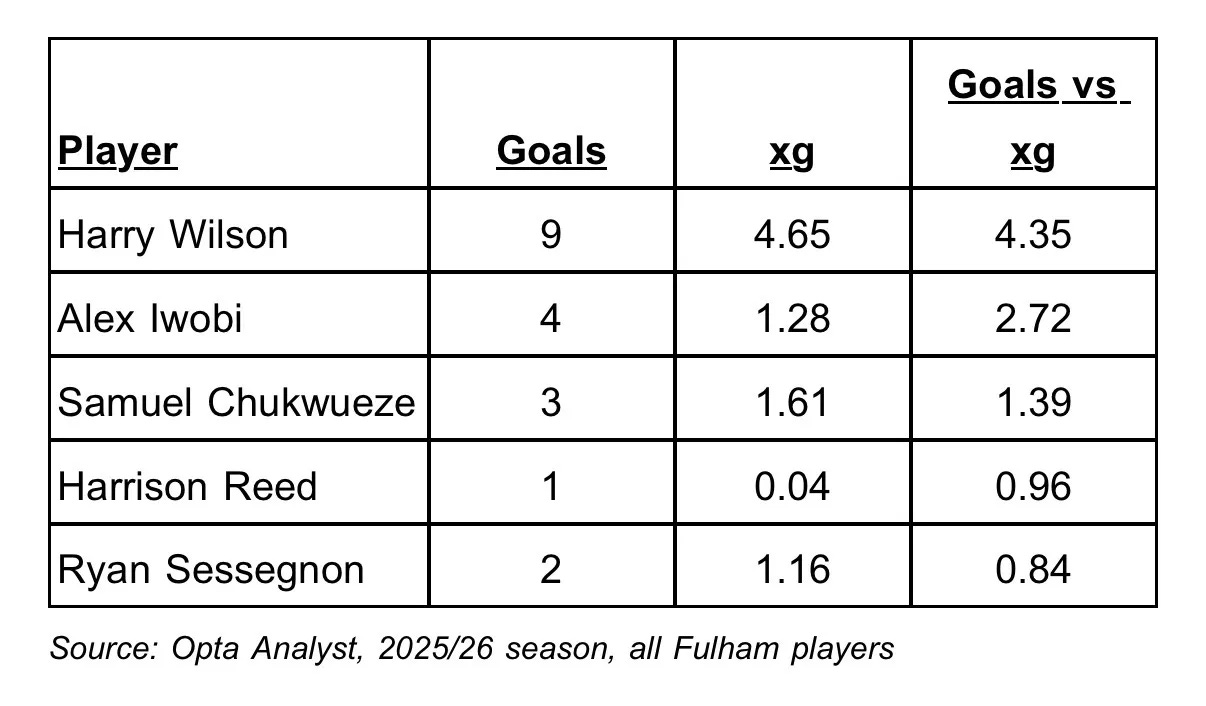
Note, I haven’t updated this chart since this piece was published but, unfortunately, Harry didn’t score many more afterward. But, the fact that Harry can do this is a big reason why he is suddenly attracting interest from multiple teams.
Hopefully, our next manager can build on what Silva started and implement on field changes to take advantage of additional statistical opportunities on the pitch including, in the right situation, booting it out more and pressing.
It is an opportunity to unwind some of the problematic decisions Silva made including having Bernd Leno continue to start at goal in a league where it is increasingly important to have a goalie who is strong with their feet and to start having Fulham more aggressively press and seek to win the ball back in advantageous areas of the pitch.
Great article. Really interesting to hear the stats. I thought teams had just made an error when they kicked off to out of play. I wonder with Harry if his drop off was caused by defenders being more aware of his threat.
Maybe the club should bring in Big Sam?