


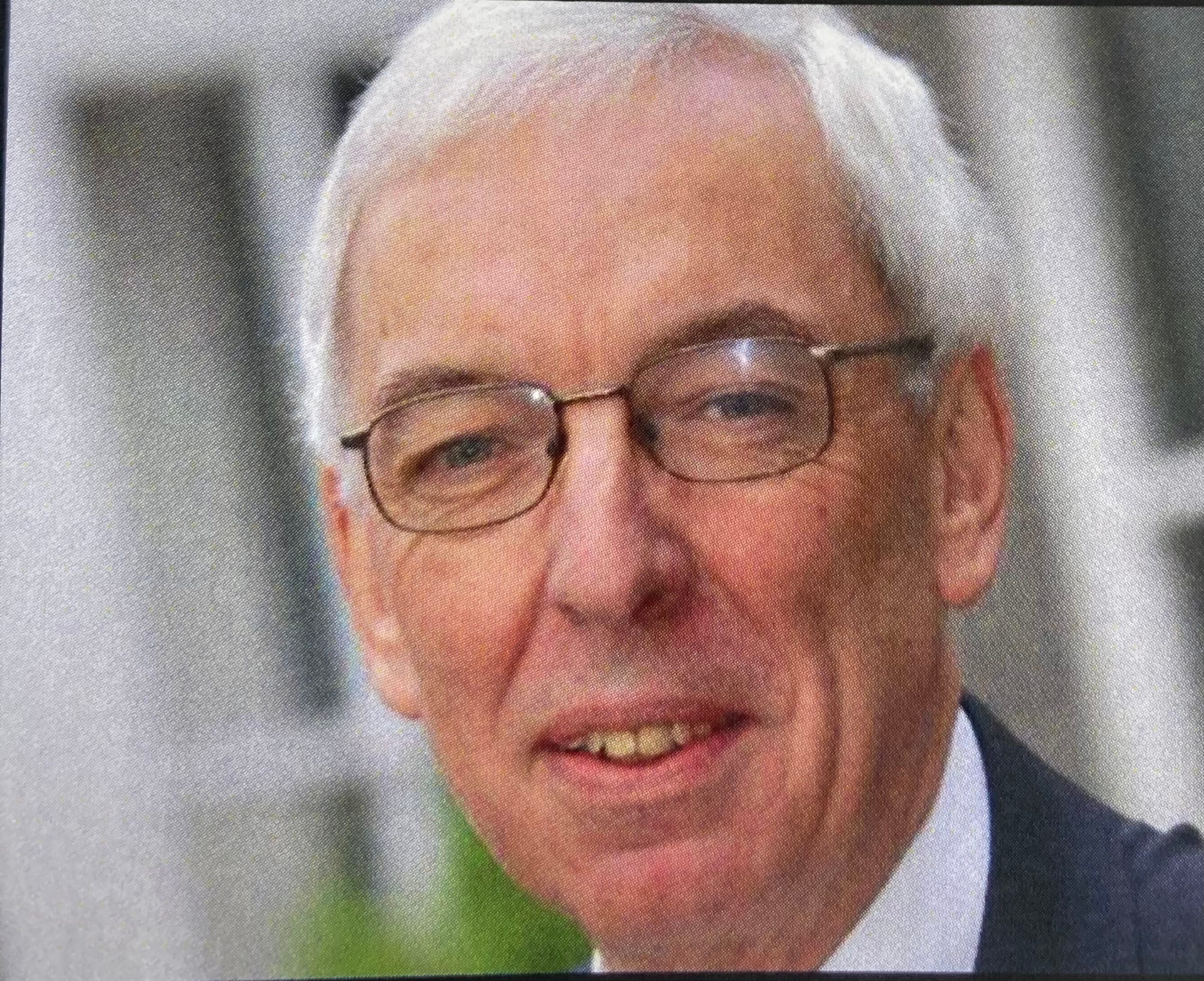
Dennis Turner’s name may be familiar to relatively few – but those who encountered him in person know how important he was in Fulham’s off-field history. Indeed, he was the club’s historian, writing two definitive and many smaller books on them by the time of his death in 2014. He also edited the matchday programme for many years, never taking a salary yet producing a publication that was not only packed with authoritative reading but also made the club money when that was in short supply.
Born in 1946, Dennis attended his first Fulham game in October 1952. He rose from supporter status to become a director in April 2009, serving for just over four years prior to the Khan family takeover. He was very much involved with the club in the turbulent period when chairman Ernie Clay sold up and it seemed Fulham Park Rangers would be the result and the Cottage would be lost.
I was recruited to the programme team in 1983 to write a column on Fulham’s celebrity fans. Dennis, Chief Economist for the HSBC (formerly Midland) Bank in ‘real life’, was also a music devotee, and had enthusiastically taken up my idea.
At the end of the season he reverted to banking type and showed the team of volunteer writers a document called a spreadsheet (who knew?) illustrating the money we had helped generate. Probably enough to buy a lower-division left-back!
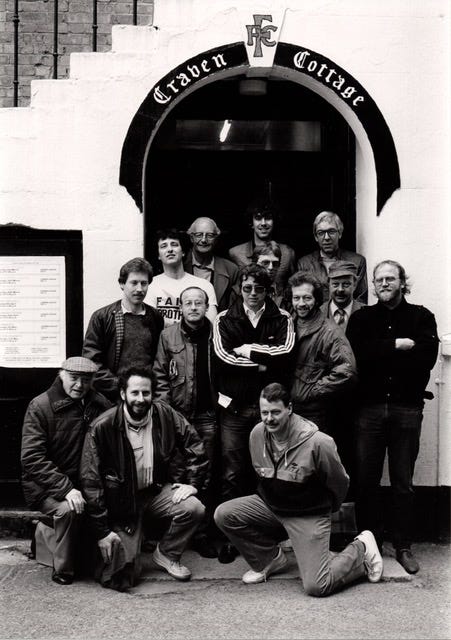
Things were both different and more difficult in the pre-internet age when it came to assembling a match programme. Dennis organised a team of motorcycle messengers in conjunction with programme printers Ward and Woolverton to collect typewritten (or even handwritten) articles from his writers and deliver them to the typesetters: no internet and very few personal computers in the 1980s! Then he would check the proofs when they came back by bike, and the printed programmes were always there at the Cottage come Saturday morning. Delivered on a wing and a prayer – or in Dennis’ case, cigarettes and a steady stream of black coffee.
As contributor Chris Mason, who initially wrote the opposition ‘pen pic’ biographies, now fondly recalls, “The club itself had very little to do with the programme, other than selling a bit of advertising space – a very little bit of advertising space, as the programme had a limited number of pages and Dennis insisted it had as much purely FFC-related information as possible.
“Not only did Dennis edit the programme and write the ‘Inside the Cottage’ column but he also acted as its accountant. We contributors were all unpaid but Dennis saw to it that the programme (no pretentious-sounding Matchday Magazine) always made a profit for the club. Not a lot by today’s standards, perhaps, but a profit nonetheless – and all the more remarkable as most home games attracted no more than a few thousand people, about 75% of whom were more than happy to fork out less than a pound for something worth reading.”
Turner’s aim was indeed purely to help the club – so much so that he resisted having colour photos in the programme because black and white was cheaper to reproduce. And, in the opinion of many, more dramatic. (Fellow Fulham legend Ken Coton was, needless to say, the man behind the lens.) He stepped back from editing the programme for a year, letting Chris Mason take over, but regained the reins after a season. Fulham was an addiction for Dennis, and he couldn’t keep away.
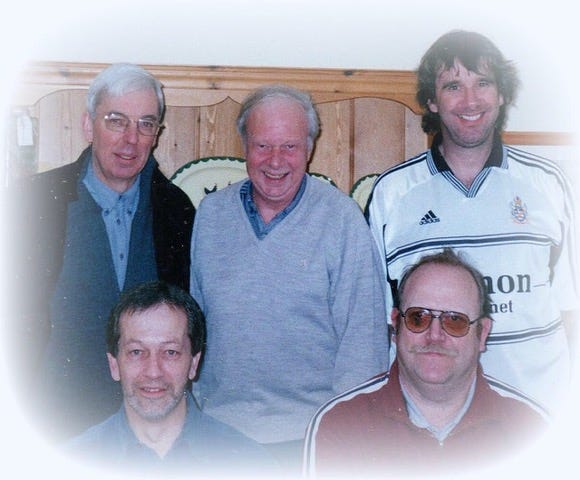
He marshalled his programme team astutely, and many well known names passed through the ranks. As well as Alex White, the current club historian and Dennis’ sidekick on the statistics side, there was Alex Ferguson (The Traveller) and Jim Sims (Lilywhite) majoring on awaydays and former players. David Lloyd went on from his programme stint to found the TOOFIF fanzine, a phenomenal publication published over many years.
But, like Hotel California, not everybody was allowed to leave, as contributor Paul Hooper explains. “After five seasons on the programme I phoned Dennis one evening during the close season to submit my resignation. After a pause, he said: ‘Let me explain to you, Paul, how these things work; if you tender your resignation it doesn’t take action until I actually accept it.’ Another pause. ‘And I don’t accept it.’”
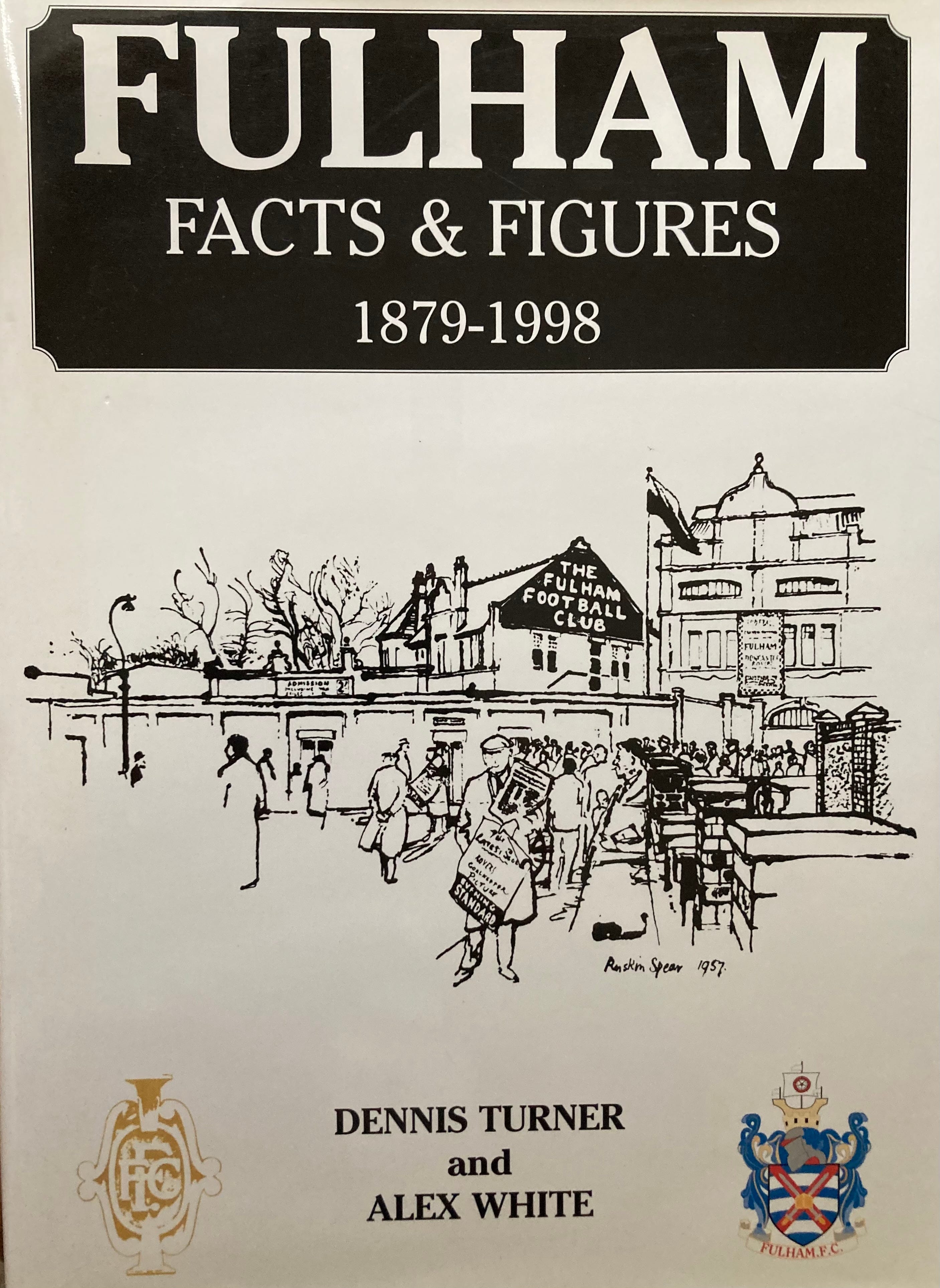
Dennis (with Alex White) wrote the first definitive history book on Fulham called Fulham: A Complete Record 1879-1987, following it up with Fulham Facts And Figures 1879-1998. When players had testimonials to fund their life after retirement he was invariably brought in to assist: among the results were benefit-match programmes for Simon Morgan, Gordon Davies and Glenn Cockerill.
DMT, as I always think of him, had started his working life in the late 1960s as an economist for a trade union, moving on to work for the government in Whitehall encouraging economic development and finally the world of banking and high finance. He retired from HSBC in 2011, but enjoyed less than three years of retirement.
After his passing, 1980s striker Gordon Davies referred to him as “A true Fulham legend who never even wore the shirt,” while Les Strong, a 1970s stalwart, said “If anyone was synonymous with Fulham through the decades I’d say that man was Dennis – a true Fulham man through and through.” For long-time matchday announcer David Hamilton, he was “quite simply irreplaceable.” It’s clearly right, proper and Fulhamish to celebrate such an influential and unique character who left his mark on Fulham Football Club in so many ways.
Today’s programme, as Chris Mason reflects, is an altogether different beast to a Turner production. “Glossy it may be. Larger it certainly is. But what of the content? An amalgam of trite populist nonsense, full of advertisements, photos of players needing a shave and brightly coloured silliness. It is presumably designed to appeal to younger supporters, provided their mums and dads can afford the inflated price after they have forked out for match tickets and ludicrously expensive replica shirts.
“Together with his helpers, Dennis produced a well-written, informative and often amusing publication which, in the world of football, was universally admired. I have a feeling he would intensely dislike the current programme because it no longer has what it always did have under his leadership. Integrity, and – above all – heart.”

Great that Dennis Turner is remembered in Fulhamish.
As a fan of nearly 60 years I recall those difficult times for the club. It was people like Dennis and the others you mention in your article who helped keep the club going with their knowledge and passion for the club.
In fact, we all did our bit just by turning up for games…there was a real hardcore of fans !
Interestingly, my twin brother and fellow Fulham fanatic Graham (we are all Fulham fans in our family) knew Dennis quite well. Graham worked for Midland bank and HSB for over 20 years, leaving in 2007.
In fact Dennis used articles, cuttings and information for one of his books (it must have been the last one he co/wrote) from scrapbooks put together by our father (Doug Simpson). Dad put together an extensive and complete record of Fulham matches in season scrapbooks covering every season from around 1950 onwards. He also collected every programme of every match each season covering the same period of time, keeping them in individual season binders. Dennis used some of this information and material for some of his publications.
Dad is still alive but doesn’t do the match scrapbook cuttings anymore.
They were great to look at as a kid growing up !
I know that my twin brother Graham was very upset when Dennis passed.
Paul Simpson.
I know that